Showing posts with label 12 steps to holiness. Show all posts

Monday, December 29, 2014

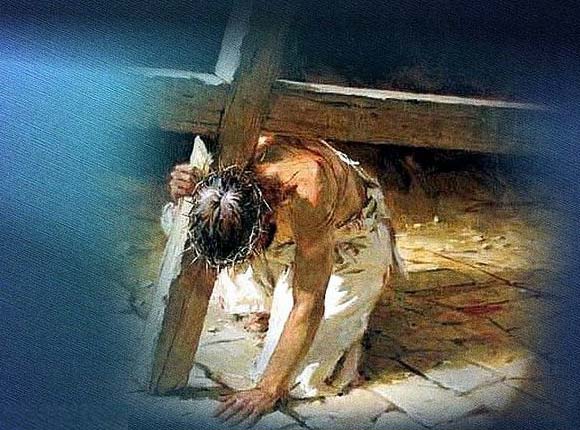
On Self-Denial and Love of the Cross

If any man will come after Me, let him deny himself, and take up his cross and follow me. ~ Matt 16:24

I admit readily that I have a very difficult time carrying any cross. I suffer from chronic migraines and this year has been better than previous years, and still I've complained. Dec. was a tough month but it took me a while to give thanks and praise to God and sadly it was more with a spirit of resignation than that of rejoicing. However, this month, with St. Alphonsus' help I've been able to look at the many blessings that come with this particular cross. 1. Letting go of expectations. 2. Lying in bed in prayer. 3. Scribbling in my notebook -- pouring out my heart to God on the page. 4. Awaiting Him. Come Lord Jesus. 5. Offering it as a sacrifice for the conversion of others. 6. The time to contemplate what is to come. 7. Watching my husband and children care for each other and me.
We are so conditioned to do things, it's hard to just be. This is when I remember how sweet it is to waste time with God, just like I did when Michael and I first met and we wasted hours together, doing absolutely nothing but simply being together.
The words of the great Spanish mystic, John of Avila, come to mind: “Do not think now of what you would do if you were well, but be content to remain sick as long as it pleases God. If you are seeking the will of God, what matters it whether you are sick or well?” St. Frances de Sales (patron of writers) maintained that we can serve God better by suffering than by laboring. And I have to remind myself of this every time I get hit on the head with Harry.
My cross is not that heavy when I compare it to others' but it is mine to carry. I have wondered why suffering is the way to God; wouldn't it be easier if the path were more pleasant? More people would walk it. But it is not the way of our Lord.
St. Alphonsus begins this chapter with, "The love which our Divine Master Jesus entertained for the cross was so great that He embraced it from the first moment of His Incarnation. The will of His heavenly Father had decreed that His life on earth should be the way of the cross; accordingly, He began His sorrowful journey to Calvary's Mount the very moment that ‘the Word was made flesh and dwelt among us’.
"Hand in hand with the love of the cross is the virtue of self-denial, for he who is attached to the comforts of life or to himself lacks courage to walk in the bloodstained footsteps of the suffering Savior.”
Peace of Heart
"Patience hath a perfect work, says the Apostle James (1:4), for by patience in bearing the crosses of life we make a perfect sacrifice to God. ... Patience is to be preferred to the courage of the hero. Many a man will display great courage in undertaking and bringing to completion some pious work; but he may not have patience enough to bear with the little annoyances and contradictions he encounters. For such a one it were better to be steadfast in patient suffering than courageous in great undertakings. ... In a word we all have something to endure ...
“Accordingly, we can enjoy true peace of heart only when we carry our cross with patience and resignation.
Value of Suffering
"If you are forced to acknowledge, dear Christian reader, that you have offended your God, and you wish at the same time to sanctify your immortal soul, you should rejoice when God sends you suffering. ... When God gives you something to suffer, says St. Augustine, He acts as a physician, and the suffering He sends is not a punishment but a remedy. ... But suffering is not only an excellent means of atonement for past sins, it is also an abundant source of merit.
Proof of Love
St. Alphonsus says, “Suffering is the touchstone of love. … Love is patient, says St. Paul, it beareth all things (1 Cor. 13:4). It patiently carries the external as well as the internal cross: for example, the loss of health, of fortune, of honor, of relatives and friends; anguish, temptations, pains and spiritual aridity. By patience virtue is tried. … “Because thou wast acceptable to God, it was necessary that temptation should prove thee (Tobit 12:13).”
To Suffer is to Pray
“You say you cannot pray? Why not?” asks St. Alphonsus. “What prevents you from turning your eyes to Jesus Crucified and offering Him the sufferings you must endure? The best prayer you can say is to resign yourself to the will of God in the midst of your sufferings, uniting your pains to the pains of Jesus Christ and offering them as a sacrifice to God.”
Spiritual Aridity
I wanted to share this bit because we all go through periods of spiritual dryness. I’m still in a honeymoon period since our conversion, but I know there will be greater trials and I want to remember these words of St. Alphonsus. “There is a great need of patience in bearing the cross of spiritual abandonment, for it is one of the hardest trials that a soul who loves God can endure.”
Patience again!
“By means of spiritual aridity, God unites Himself intimately with the souls He loves in an especial manner. What hinders us from being truly united to God is attachment to our inordinate inclinations. When God, therefore, desires to lead a soul to His perfect love, He endeavors first to free her from all attachment to created things. To this end He deprives her little by little of earthly goods such as riches, honors, relatives, bodily health and so forth. Then follow contradictions and humiliations of every sort. These are so many means that the Lord makes use of to divest the soul of all attachment to creatures and to self.
“In the beginning of the soul’s conversion, God often gives her a flood of consolations. In consequence of this, the soul is gradually weaned from attachment to creatures and gives herself to God; but not as yet in a perfect manner, for she acts more for the sake of the consolation of God than for the God of consolations.”
This describes me so well. I only pray that my will be strong to do what is pleasing go God. Let us therefore place our unbounded trust in God.


Tuesday, December 2, 2014

On Prayer

We ought always to pray, and not to faint. Luke 18:1
Rejoice always; pray without ceasing; in everything give thanks; for this is God's will for you in Christ Jesus. 1 Thess 5:16
Pray, then, in this way: Our Father who is in heaven, Hallowed be Your name. Matt 6:9


I blame a late Thanksgiving for doing my Nov. post in Dec. This was another favorite chapter because like Tweety Bird I can say, “I did! I did! I did pway.” Nowadays, my heart and mind are lifted to God many times throughout the day. It is as natural for me to be with Him as it is to be with my family or a good friend and in prayer, time and distance from loved ones dissolves. I didn’t come by this at once, rather in small steps, first by thanksgiving and sorrow for my sins, later petitioning, and still later in contemplation. I find it fascinating that I lose nothing of myself by being open to Him. I am still me, but being with Him makes me as I ought to be. There are times even now when I don’t want to talk to God, but it’s laughable that I can even try to keep a secret from Him. He knows the depths of my heart even when I don’t want to admit to some of my longings and desires. Even if I begin my prayers like a recalcitrant child, I end up in His arms, content. 

When I lost my faith at age 12, I didn’t stop praying immediately. In fact, I wept because I thought I lost my best friend, but a few months later, my mind hardly turned to Jesus, and a few years later, I gave Him no thought at all. And I can honestly say that it was the path to perdition. It is so easy to become your own god, to do what is right for yourself (moral relativism), and not give a care to anyone else. I am not the most charitable person on this planet, but in my 20s, I was downright callous. The poor and suffering were not even worth a thought, a tear, a prayer. And yet, prayer … sweet hour of prayer. It is the *one talent* we are all given, by which we can gain all other graces. I never thought about this until St. Alphonsus pointed it out in this chapter and which was discussed in a beautiful homily by Father Ryan: http://newtheologicalmovement.blogspot.com/2014/11/the-one-talent-prayer-gains-all-rest.html   
St. Alphonsus says, “The worship of God takes the first place in the order of moral virtues; it is occupied more with God and leads us nearer to Him than the others. For every Christian, therefore, who is striving after perfection it must be a matter of no little concern to make this virtue his own in the highest degree. Now the easiest means of doing so, a means that we can employ at all times and in all places, is found in prayer. Whether it be a prayer of praise or thanksgiving or impenetration or propitiation, we are worshipping God, for every prayer is a humble acknowledgement of the greatness or goodness or fidelity or mercy of God.”
“Vocal prayer, or prayer pronounced by the lips, is very pleasing to God because by it the endless Majesty of God is acknowledged and glorified. … In order, however, that vocal prayer may tend to God’s glory and our own salvation, it must be accompanied by attention and devotion. Such prayer is like sweet-smelling incense that is agreeable to God and wins for us treasures of graces. On the other hand, prayer without recollection is insulting and offensive to God and calls down His wrath on the offender."

OUCH!!! I am mortified at all the times I have given lip-service but my mind was elsewhere. St. Alphonsus always gives it to me straight.
We can blame the devil for the worldly distractions. St. Alphonsus says, “It’s because he desires to rob us of the benefit we derive from fervent prayer; and on the other he wishes to make us guilty of disrespect towards God, and therefore deserving of punishment.” As always, he gives some practical suggestions. “Offer Him beforehand (Mass) the prayers you intend to say, and beg Him to preserve you from distractions. During prayer, avoid haste... Abstain from everything that is incompatible with interior recollection, ex. gazing at every distracting object, speaking with others, etc. Interior attention is threefold: it may be directed to the words you utter, or to their sense, or, finally, to God. When during prayer, your mind is fixed on God with a view to adore Him, to thank Him, to love Him or to ask Him for His graces.
“The easiest means of practicing vocal prayer consists in uttering fervent ejaculations. These pious outpourings of the heart need not be restricted to any particular place or time. They are in order at all times and in all places, at work, at meals, at recreation, at home or away from home. They may take the form of acts of desire, conformity, love, oblation, or self-denial; they may be acts of petition, thanksgiving, humility, confidence and the like. ... Those who frequently utter ejaculations close the door against Satan and prevent his constant annoyance and wicked thoughts." Some examples:
O my God, I desire only Thee and nothing else.
I give myself wholly to Thee.

My God, I love Thee.
My Love, my All!

Jesus!

That last ejaculation was sometimes all I could say when I was in severe pain. Just "Jesus." On better days, I find myself singing various hymns or parts of the Mass, like the Gloria, Sanctus, Agnus Dei.

St. Alphonsus reminds us, “The invocation of the holy names of Jesus, Mary and Joseph should have first place. All that we love and desire and hope to possess is summed up in these beautiful names. Jesus Christ has not saved us only once; He is continually saving us by His merits, when in accordance with His promise, He frees us from the danger of sin as often as we invoke His Holy Name. Whatsoever you shall ask the Father in my name, that I will do. John 14:13

"With the holy name of Jesus we must unite the beautiful name of Mary. It is so powerful that all hell trembles when it is pronounced. ... If the King of Heaven and earth conferred on Joseph the honor of being the foster father of His Beloved Son and the protector of the holy and immaculate Mother, surely it behooves us to honor him and invoke his powerful intercession.

“You may also, without uttering a word, raise your eyes to Heaven or cast a loving glance at the tabernacle or the crucifix. … The best acts of love, of course, are those that well up from the depth of the heart at the impulse of the Holy Ghost."

St. Alphonsus then focuses the remainder of the chapter on silent prayer and meditation. He says, "Our Divine Redeemer had no need to retire to a lonely place to pray; for as His blessed soul was constantly in the presence of His heavenly Father … He did this to teach us the necessity of interior prayer."
"Mental prayer is like a mirror. If you have a speck of dirt on your face and come before a looking glass, you see the dirt at once and remove it. Had you not looked in the mirror, you would not have thought of the dirt nor washed it away. So it is with mental prayer; we are standing before the mirror of our soul. It is then we recognize our faults and the danger we are in, and accordingly we take measures to rid ourselves of the faults and to escape from the dangers that threaten us."

He then gives a method that is in three parts: preparation, consideration and conclusion. Since this post is already too long, I direct you to: St. Alphonsus' method of mental prayer

I agree with the saint completely when he says, "Without prayer it is absolutely impossible to lead a virtuous life." If you do not pray, do not despair. You can start now. Let the Jim Reeves song give you hope. It still brings tears to my eyes. I used to sing these songs with my mother. Requiescat in pace, Ai.


Monday, November 3, 2014

On Recollection

Having dismissed the multitude, he went into a mountain alone to pray. ~ Matt. 14:23


October flew! We're coming to a quiet time in our lives and that's exactly what we need. We are enjoying eating dinner together without having to rush to volleyball practice or a football game. And Michael and I are back to strolling in the moonlight. He tells me the mosquitoes are gone but they bite me still. Sweet blood and all ... 

Our little hamster died from old age, fat and happy, no diseases. Dagny had cleaned his cage and he was looking a bit tired as he clambered up to eat and wash himself. He made himself a little nest. The next morning we discovered he had passed on to a land of carrots and bananas, peanuts and sunflower seeds. It's strange to no longer save the rolls of empty tubes for him. He took great joy in tearing up the tissue, and we took joy in watching him. But, I'm supposed to be writing about St. Alphonsus' teaching on Recollection.

This was by far my favorite chapter so far. Everything resonated because I am living that life right now ... psst, you don't have to be a nun :) St. Alphonsus says, "To preserve recollection of spirit or the constant union of the soul with God, three things are necessary: solitude, silence, and the recollection of the presence of God.

"I will lead her into the wilderness and I will speak to her heart. Osee 2:14. God speaks to the soul in solitude, and by His words the heart is inflamed with divine love. My soul melted when my beloved spoke, said the spouse in the Canticle (5:6).

So, seek solitude, practice silence, and rest in God by keeping the thought of His presence ever before you."

The saint reminds us that it's not only solitude of the body that is important, but the solitude of the spirit. He says, "What benefit it is to live in the desert if the soul still clings to the things of the earth? Solitude of the heart consists in banishing from the heart all desires and inclinations that are not for God, and in performing our actions simply with God's good pleasure in view. The solitude of the heart consists in being able to say, "My God, Thee alone do I desire and nothing else."

I loved this because it reminds me that although I live in this world, I do not have to be attached to it.

The saint exhorts us not to be idle. "It is not to be supposed that solitude and retirement are synonymous with idleness. Many live in retirement, but it is an inactive and useless retirement of which they shall have to render an account. Devout souls, on the contrary, are like bees that are never tired preparing honey for their cells. No time must be lost, but every moment employed in prayer, in reading, or in performing the duties of your state in life."

St. Alphonsus extols the virtues of work. "Work is an effective remedy against temptations. While our hands are occupied with external occupations, our heart can be fixed on God. The good intention we make in performing our labors sanctifies them in the sight of God and even makes labor a prayer, for prayer has been called the raising of the mind and heart to God.

"Those who have the spirit of prayer love silence, which has deservedly been called a protectress of innocence, a shield against temptations and a fruitful source of prayer. Silence promotes recollection and awakens good thoughts in the heart. Silence preserves us from many sins by removing the occasion of uncharitable talk, rancor and curiosity; on the other it aids us in the attainment of many virtues, like humility and meekness."

The saint reminds us that remembering the presence of God is an excellent means of "quieting the passions and of resisting temptations to sin ... Men fall into sin because they lose sight of the presence of God. It was the thought of God that gave the chaste Susanna courage to spurn the wicked advances of the men who tried to seduce her and even threatened her with death. She said, It is better for me to fall into your hands without doing evil, than to sin in the sight of the Lord. Dan 13:23.

"Union of the soul with God is the third happy result of walking constantly in His presence. Love is always strengthened by the presence of the object loved. In order to remain intimately united to God, it is not sufficient to make a morning and evening meditation. If you remove boiling water from the stove, it will soon cool off. And so it is with the human soul; to keep the fire of God's love aglow, the thought of His presence must be constantly before us."

As always, St. Alphonsus gives practical suggestions to practice the virtues. He says, "picture our Lord as present with us wherever we may be. We may think of Him at times as a little babe in the crib of Bethlehem; as a poor exile on His way to Egypt; as an apprentice in the workshop of Nazareth; a man of sorrows who was condemned a criminal to suffer and die; as scourged and crowned and crucified. One needn't strain the imagination, which is apt to be very fatiguing and might possibly be injurious." (I had to include this last bit because it makes me laugh. I suppose for us writers, this exercise is not at all strenuous.)

"Another way is based on the truths of holy faith. It consists of seeing God with the eyes of faith and being thoroughly persuaded that He is present and a witness of our actions. It matters not that we are unable to see Him with our bodily eyes; we cannot see the air around us, and we never doubt for a moment that it exists and that without it we could not possibly live. It is sufficient to make little acts of faith.

"Another beautiful practice is that of seeing God in His creatures. The beauties of nature such as the rising and setting of the sun, a magnificent landscape, a majestic river, a garden of beautiful flowers are so many reflexes of the beauty of the Creator. The thought of a learned or handsome or holy man can lead us to admire the wisdom and beauty and sanctity of God and return Him thanks for permitting His creatures to share in His holy attributes.

"The most perfect method, however, of keeping alive the thought of God's presence consists in beholding God within our very selves. It is not necessary to ascend to Heaven to find the Lord God; we need only to recollect ourselves, and we shall find Him within us. St. Paul says, Know you not, that you are the temple of God, and that the Spirit of God dwelleth in you? 1 Cor 3:16. And our Divine Savior Himself has said, If anyone love me, he will keep my word, and my Father will love him, and we will come to him and make our abode with him. John 14:23

Tuesday, September 30, 2014

On Mortification and Migraines

Our blessed Lord Jesus Christ said: If any man will come after me, let him deny himself. Matt. 16:24

I can't get over how quickly the time is passing. Sept. is coming to an end and with it comes an exhortation from St. Alphonsus on mortification. I know this is not a popular topic, but practicing mortification elevates a soul to God, so well worth your time to read these words from St. Alphonsus:

"Every Christian is bound to practice mortification. With regard to those things we may lawfully enjoy, mortification is not obligatory, but it is very useful and meritorious.

"If you deny your body lawful pleasures, it is not apt to seek unlawful ones; but if you indulge in all the lawful enjoyments you will soon cross the line into forbidden territory.

I love that the Lord our God is so generous with joys and pleasures of life. They are for our enjoyment, but at the same time, we may deny ourselves and make a sacrifice. St. Francis Borgia, while hunting, would cast his eyes down at the moment the falcon seized his prey, to deprive himself of the pleasure of such a sight. We too, can deny ourselves sweets or meats, and many other simple pleasures throughout the day as a discipline.

In the same way, if we suffer from chronic aches and pains, it is an opportunity to bear them without complaints. So my dear readers, if I ever complain about a migraine, remind me to offer it up. Thanks be to God, my health is vastly better now, that when the migraines do come, as they did this weekend,  it is easier to unite myself to Christ crucified and offer my suffering for the conversion of souls. 

St. Alphonsus likens mortification to having to drink bitter medicine to heal our bodies. If the physician had misplaced sympathy for his patient, it is cruelty. How well I've known this since I was a child, having to take bitter pills to clear parasitic infections. And as much as I hated my mother for shoving those pills down my throat, for the horrible side effects, over time I regained my health. Later I was grateful. But during those miserable weeks of treatment, my mother, ever patient, ever loving, sat beside me, taking my hateful words and returning them with words of comfort.

St. Alphonsus says, "It is certainly true that the world and the devil are great enemies to our salvation; but the greatest enemy of all is our own body because it is always with us." Oh, this cuts to the core ... we ourselves are our own worst enemies. We are attached to our thoughts, our tongues, our hands. Ouchie ... it's a constant battle to gain self-mastery.

So what are the advantages of mortification? St. Alphonsus says, "By mortification we may expiate the temporal punishment due to our sins." Tell yourself it is a little purgatory. "Mortification raises the soul to God."

"It is proper to animals to gratify their senses; it is characteristic of angels to do the Will of God ... we become like angels when we strive to do God's Will, but we become like animals when we seek to gratify our senses. Either the soul must subject the body or the body will make the soul its slave."

I have focused too much on exterior mortification, but there is such a thing as interior mortification. St. Alphonsus says, "it consists in restraining our inordinate self-love and self-will."

Although our sinful nature makes it impossible to be completely free from self-love, we can keep it in check. Pray this: "O God, do not let me fall prey to my passions, which rob me of Thy holy fear and of reason itself."

St. Alphonsus reminds us: "Man's life on earth is a warfare (Job 7:1). He who encounters an enemy in battle must have his weapons in hand to defend himself; if he neglects to fight, he is lost. No matter how many victories we may have won, we cannot afford to lay down our arms; for our passions, in spite of repeated defeats, are never entirely destroyed." They are like weeds that crop up again and again even if think we've cut them from the roots.

This is why I have Ephesians 6:11-20 taped on my kitchen cabinet. We're talking spiritual warfare here: Put on the whole armor of God, that you may be able to stand against the wiles of the devil.  For we do not wrestle against flesh and blood, but against principalities, against powers, against the rulers of the darkness of this age, against spiritual hosts of wickedness in the heavenly places.  Therefore take up the whole armor of God, that you may be able to withstand in the evil day, and having done all, to stand.
Stand therefore, having girded your waist with truth, having put on the breastplate of righteousness, and having shod your feet with the preparation of the gospel of peace; above all, taking the shield of faith with which you will be able to quench all the fiery darts of the wicked one. And take the helmet of salvation, and the sword of the Spirit, which is the word of God; praying always with all prayer and supplication in the Spirit, being watchful to this end with all perseverance and supplication for all the saints— and for me, that utterance may be given to me, that I may open my mouth boldly to make known the mystery of the gospel, for which I am an ambassador in chains; that in it I may speak boldly, as I ought to speak.

Friday, August 22, 2014

On Meekness and Humility

Learn of me, because I am meek and humble of heart; and you shall find rest in your souls. Matthew 11:29

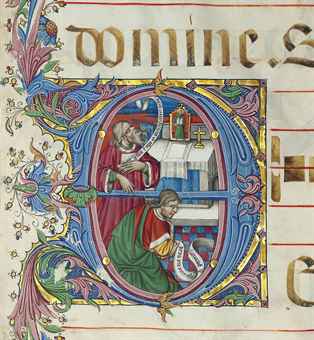
THE PHARISEE AND THE PUBLICAN, historiated initial 'D' on a leaf from an ILLUMINATED MANUSCRIPT GRADUAL ON VELLUMThis month St. Alphonsus exhorts us to be humble. I have been reading and re-reading this chapter because I struggle so much with this. The moment I attain some level of humility, I am proud of it. I am like the Pharisee who says, "thank God I'm not like those other people ..." I used to say all the time, "I could be much worse" and continued with my sinful ways feeling quite superior to others. I didn't have a contrite heart at all. Now, I am appalled at my past. I am like the publican who says, "O Lord, be merciful to me, a sinner." But pride still rears its ugly head too often.

St. Alphonsus says:

"Humility is called by the saints the foundation and safeguard of all the virtues. If it is not the most prominent among the virtues, it occupies, according to St. Thomas, the first place as the foundation of the rest. In the erection of a building, the basement comes before the walls and pillars, even though the latter be of gold. And so in the spiritual life humility must precede everything else in order to banish pride, to which God is so opposed.

"The Son of God descended from Heaven to teach man by word and example the value of humility, and with this end in view He went so far as to 'empty himself, taking the form of a servant, being made in the likeness of men, and in habit found as a man. He humbled himself ... even to the death of the cross.' Phil 2:7. His first appearance on earth was in the humble stable of Bethlehem; the greater portion of His mortal life was spent in humble retirement at Nazareth. He departed this life, humbled and despised, on the summit of Mt. Calvary.

"'Lord, give me the treasure of humility,' prayed St. Augustine. Humility is called a treasure because the Lord sees to it that the humble abound in good things. When man's heart is full of himself, there is no room for God's gifts. Man must therefore, as it were, be emptied of himself by the knowledge of his own nothingness. 'He that is mighty hath done great things to me,' said the Blessed Virgin Mary, 'because he hath regarded the humility of his handmaid.' Luke 1:48.


"Humility and meekness were the favorite virtues of Jesus Christ and He recommended them in a particular manner to His disciples when He said, 'learn of me, because I am meek and humble of heart; and you shall find rest in your souls.' Matthew 11:29 

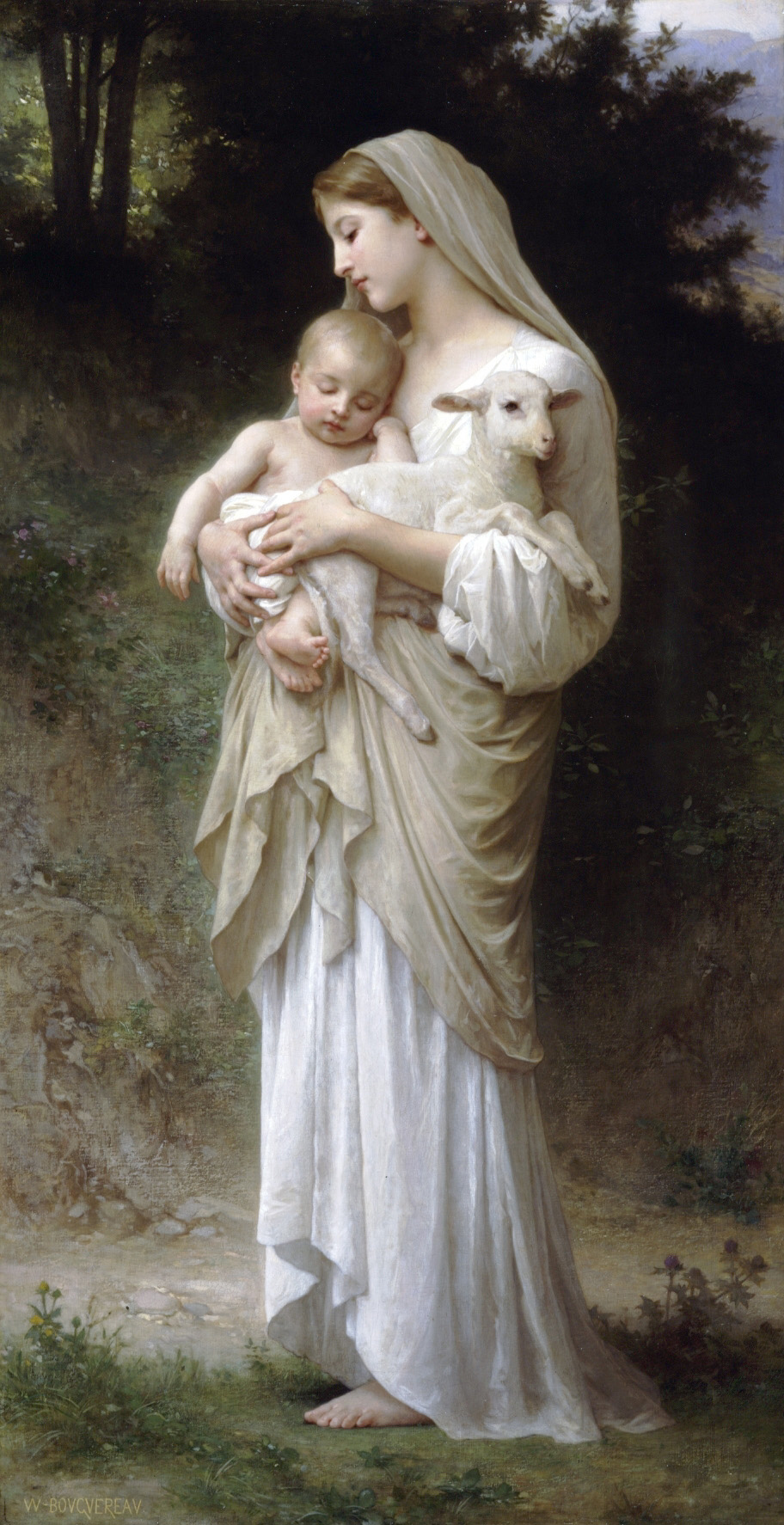
"Our Divine Redeemer was called the "Lamb of God," not only on account of the Sacrifice He was to make of Himself on the Cross in expiation for sin, but also on account of the meekness that characterized His whole life and particularly during His bitter Passion. 

"When He hung upon the Cross and His enemies loaded Him with insults and ignominy, He turned to His heavenly Father and said, Father, forgive them, for they know not what they do. Luke 23:34.

"How dear to God are those meek souls who bear all manner of offenses and indignities without giving way to anger!"

St. Alphonsus reminds us that even when we must discipline, we must do it with meekness. Like the good Samaritan, we must heal the wound with oil and wine.

"Meekness accomplishes far more than anger and bitterness."

Finally, St. Alphonsus reminds us to be meek towards ourselves, when we have committed a fault. "To be angry with oneself after committing a fault is not a sign of humility, but of secret pride; it shows that we do not regard ourselves as the weak and wretched creatures that we really are. St. Aloysius said, the devil likes to fish in troubled waters, where we can distinguish nothing.

Rafael Cardinal Merry del Val"We must turn to the Lord with humility and confidence. We must do as the Apostles did when they were tossed about by the stormy sea; they had instant recourse to their Divine Master; He alone can still the storms of the human heart."

This post is rather long, and bless you if you read it all the way. This chapter has been a turning point in my path to holiness. I hope it will be of help to you as well.

I leave you with the Litany of Humility by Rafael Cardinal Merry del Val (1865-1930)  -- it is one of the most difficult prayers to recite and I still cannot pray it with my whole heart. Dear friends, pray for me and I will pray for thee. 

O Jesus meek and humble of heart, Hear me.
From the desire of being esteemed, Deliver me, Jesus.
From the desire of being loved, Deliver me, Jesus.
From the desire of being extolled, Deliver me, Jesus.
From the desire of being honored, Deliver me, Jesus.
From the desire of being praised, Deliver me, Jesus.
From the desire of being preferred to others, Deliver me, Jesus.
From the desire of being consulted, Deliver me, Jesus.
From the desire of being approved, Deliver me, Jesus.
From the fear of being humiliated, Deliver me, Jesus.
From the fear of being despised, Deliver me, Jesus.
From the fear of suffering rebukes, Deliver me, Jesus.
From the fear of being calumniated, Deliver me, Jesus.
From the fear of being forgotten, Deliver me, Jesus.
From the fear of being ridiculed, Deliver me, Jesus.
From the fear of being wronged, Deliver me, Jesus.
From the fear of being suspected, Deliver me, Jesus.
That others may be loved more than I,
   Jesus, grant me the grace to desire it.
That others may be esteemed more than I,
   Jesus, grant me the grace to desire it.
That in the opinion of the world, others may increase, and I may decrease,
   Jesus, grant me the grace to desire it.
That others may be chosen and I set aside,
   Jesus, grant me the grace to desire it.
That others may be praised and I unnoticed,
   Jesus, grant me the grace to desire it.
That others may be preferred to me in everything,
   Jesus, grant me the grace to desire it.
That others may become holier than I, provided that I become as holy as I should,
   Jesus, grant me the grace to desire it.


Friday, July 25, 2014

On Obedience

Summer is flying ... it's nearly the end of July. And St. Alphonsus has yet another virtue -- that of obedience -- for us to practice.

You are my friends, if you do the things I command you. John 15:14

When one of the women in the crowd raised her voice and said to Him, "Blessed is the womb that bore You and the breasts at which You nursed." But He said, "Yes, rather, blessed are they who hear the word of God, and keep it." Luke 11:28

I pray often for the gift of obedience and by the grace of God, I am learning to pay attention to what He might have me do, instead of dashing off to do what I would like. I see this in my own children, how difficult it is for them to be obedient, but they do so much better than I ever did at their age. No matter the grousing and complaining, they do obey. Like an old-fashioned wife, I am also obedient to my husband. It is something that I vowed when I got married and it has served us very well. And my husband takes my wishes into consideration. One very concrete thing that has helped me is veiling myself at Church -- not just to hide my beauty, but because it instantly puts me in an obedient frame of mind.

St. Alphonsus says, "Perfection consists in the conformity of our will to the Will of God. Now what is the surest means of knowing God's Will, and of regulating our lives according to it? It is obedience towards our lawful superiors." In my case, my husband.

"The greatest sacrifice that a soul can make to God consists in obedience to lawfully constituted superiors; for as, in the opinion of St. Thomas, "nothing is dearer to us than the liberty of our will," we can offer to God no more acceptable gift than this very liberty."

"Obedience is better than sacrifices," says the Holy Ghost (1 Kings 15:22); that is to say, God prefers obedience to all other sacrifices.

"As St. Gregory says, "By other virtues we give to God what belongs to us; by obedience we give Him ourselves."

"St. Augustine says that while Adam through disobedience brought destruction upon himself and all this posterity, the Son of God became man to redeem us and to teach us true wisdom by His life of obedience. For this reason He began as a child to practice obedience when He was subject to Mary and Joseph: He was subject to them, says St. Luke (2:51). What our Savior began as a child He continued His whole life, so that St. Paul could say: He was obedient unto death, even to the death of the cross (Phil 2:8).

"To increase our merit, Our Lord desires us to be guided by faith. Therefore, instead of speaking to us Himself, He makes His Will known to us by means of our superiors.

"When Jesus appeared to St. Paul and converted him on the road to Damascus, the future Apostle said: Lord what wilt Thou have me to do? The Lord could easily have instructed him then and there, but He did not; He merely said: Arise and go into the city, and there it shall be told thee what thou must do (Act 9:7).

Of course, the great saint reminds us that we are not obliged to commit a sin in obedience to our superiors. Hence, it is vital we form our conscience according to the teachings of the Church. She remains true to her Divine Spouse.

Monday, June 30, 2014

On Chastity

June is almost over and the virtue of the month is Chastity. Our blessed Lord says: Blessed are the clean of heart, for they shall see God (Matt 5:8).  St. Alphonsus says, he who conquers the vice opposed to this virtue will easily triumph over the rest. On the contrary, he who permits himself to be ruled by incontinency falls an easy prey to the other vices such as hatred, injustice, etc.

Our body is the most powerful weapon the devil possesses to make us his slaves. On this account it is seldom that a man comes forth victorious from this conflict. "The struggle for chastity is the most violent of all; the battle is renewed every day, and victory is rare," says St. Augustine.

St. Alphonsus reminds us that every wicked thought that enters the mind is not a sin, but the yielding or consenting to them is. When assailed by temptations, we must have instant recourse to the means necessary to overcome them. As always, he gives practical suggestions in humbling ourselves before God and having immediate recourse to God without stopping to reconsider the temptation. 
1. Pronounce the holy names of Jesus and Mary and continue to pronounce them until the temptation is overcome. It if is a violent temptation it may be well to repeat the following resolution: "Oh my God, I will rather die than offend Thee! Oh my Jesus, help me! Mary, my Mother, assist me!"
2. Receive the Sacraments of Penance and Holy Eucharist. A temptation or sin revealed is half overcome. And this Heavenly Food affords us great strength to resist temptations.
3. Devote oneself to the Immaculate Mother of God, the Virgin of virgins. Oh, how many have kept themselves pure as angels by devotion to this Blessed Queen of angels!
4. Other means will suggest themselves to each individual, such as avoidance of idleness, modesty of the eyes, and diligence in avoiding dangerous or proximate occasions.

Nearly all the passions that assail us have their origin in the unrestrained liberty of the eyes, for as a rule it is our unguarded looks that awaken in us inordinate inclinations and passions.

St. Augustine says, "from the look proceeds the thought and from the thought the desire." St. Alphonsus expounds, had Eve not looked at the forbidden fruit, she would not have fallen into sin. But she took pleasure in looking at it, and the fruit seemed beautiful and good. She took it and ate and was guilty of disobedience. We see here how the devil tempts man first to look, then to desire, and at last to consent.

I am living proof that a person can be living a sinful life for years and can still climb out of the pit by the grace of God. Do not let the devil suggest that the sins of your youth are unforgiveable. See when we are young, we are so often ruled by our passions, and it is the easiest way for the devil to win our souls. When we're older, the devil has other means, like materialism and despair ... but I digress. 

agree with the great Saint Alphonsus, for I've been able to become chaste over the years by these very practices he recommends. I think marriage is a very good institution, not just for the raising of children, but also because it protects us from our tendency to sexual sin. Of course, that doesn't mean we do not use our spouses for sexual gratification, but eventually we learn to love and love deeply. One of the best advice I got during confession was to think of the terrible scourging Jesus suffered whenever I am tempted to consent to the sins of the flesh. More recently, help has arrived in the form of Angelic Warfare. I recommend it very much for our youth. It is our greatest weapon.

I hope you will forgive me for this photograph. I was sweeping the porch and came across these two locked in a loving embrace. Since they didn't skitter away, I had to take a picture. It isn't very often that you come across such a beautiful sight. I wonder where they will lay their eggs ...

Sunday, June 1, 2014

On Poverty and Detachment

Blessed are the poor in spirit, for theirs is the kingdom of heaven. ~ Matt 5:3

Oh, how I struggle with this beatitude. My will is strong, yet relinquishing it has also been the hardest and the most freeing thing I've done. Being chronically ill forced me to spend hours in deep prayer and contemplation. I don't give up easily but how long will it take me to learn that it is in giving myself over completely to His will that I become truly happy? Am I completely poor in spirit? No. I am far from it. But even from a year ago, I see progress. Instead of praying for a contract, I pray to become a better writer. Instead of praying for a baby, I pray to be made whole and holy, a better wife and mother. Instead of praying for a specific outcome, I pray Thy will be done. Of course, I have to say this fifty times a day because my own desires are so strong. And I still have difficulty separating doing everything for the love of God to receiving some measure of earthly rewards.

St. Alphonsus says, in order to become holy we must banish from our heart all that is not for God. A heart that is filled with the things of the earth has no room for the love of God. He who brings a vessel filled with earth to the spring will never be able to fill it with water until he empties it of the earth with which it is filled.

The Saint asks, how does it happen that so many pray and go frequently to Holy Communion, and still make no considerable progress in the love of God? The reason is doubtless because the heart is full of self-esteem, of vanity, self-will and attachment to creatures.

Who me? Guilty, guilty, guilty. Now that my son is learning to drive, I am learning how to detach in ways I hadn't dreamed of. Back to the Saint:


The poor in this world do not possess poverty of spirit from the mere fact that they suffer the want of the goods of this life. Poverty of spirit consists in the desire to possess nothing but God. The truly virtuous poor desire nothing but God, and for that reason they are immensely rich.

Those who are always intent upon increasing their earthly possessions are in great danger of being eternally lost. For the desire of money is the root of all evils. ~ 1 Tim 6:9  The wealthy can practice poverty of spirit by giving alms and performing good works.

Our detachment from the things of this earth is proved by our resignation to the will of God ...  Faith teaches us that nothing happens without the permission of God ... for our good. We must remember Job who said, "the Lord gave and the Lord hath taken away."

As always, St. Alphonsus gives us some practical ways to develop detachment.

1. Dwell on the thought of death. On this day the riches and honors and pleasures of earth are all lost. We cannot bring them into the next world, where only virtue can accompany us.

2. Meditate upon the poverty of Jesus Christ. He wished to induce us to love poverty as He did, for poverty, by detaching us from earthly riches, enables us to share in the treasures of heaven.

3. Blessed are the poor in spirit for theirs *is* the kingdom of heaven. Note the present tense, the poor in spirit receive special graces here on earth now.

4. Love God without reserve. He who loves God is not anxious to gain the esteem and love of men; all his efforts are directed to one end, to please God, the only object of his love.

5. A hidden and obscure life affords great security to those who sincerely desire to love God. Our Divine Savior Himself deigned to teach us this by His own example, for He spent 30 years in the obscurity of Nazareth and the workshop of a humble carpenter. 

Three years ago, I discovered this beautiful Suscipe prayer by St. Ignatius. It has been a great help:

Take, O Lord, and receive my entire liberty, my memory, my understanding and my whole will. All that I am and all that I possess You have given me. I surrender it all to You to be disposed of according to Your will. Give me only Your love and Your grace; with these I will be rich enough, and will desire nothing more.


Tuesday, May 6, 2014

On Love

Nearly two months have gone by and I've not shared anything at all from St. Alphonsus. That's not because I have nothing to share but because the subject is so large -- on love. Am I ready to say anything profound? I doubt it, but I've had a chance to ponder and pray both on love of God and love of neighbor, the topics for March and April respectively.

Nature bids us love God! 

Thou shalt love the Lord thy God with thy whole heart, and with thy whole soul, and with thy whole mind. ~ Matt. 22:37
 
St. Alphonsus says, "Love of God is a divinely infused virtue which leads us to love the Lord our God as the sovereign good, and purely for His own sake."

The good saint challenges us and then gives practical ways to advance in God's love:
First, an ardent desire for perfect love.
Second, renounce all love that doesn't refer to God.
Third, deny oneself by gladly embracing what is opposed to self-love, and refusing oneself what self-love demands.
Fourth, frequent meditation on the sufferings of Jesus Christ, so that our hearts may be inflamed with love for our suffering Savior and to learn from Him what He desires us to do.
Fifth, prayer. "Jesus, give me Thy holy love." The Lord is generous is the bestowal of His gifts; but He is especially bountiful in giving His love to those who seek it.
 
Oh, to love Him perfectly, for nothing, no reason. It is everything. I am sorely lacking. The love I experience is bounded by my human nature. I love Him because He made me, because He is all good, because I want to be with Him, because He has blessed me abundantly. Would I love Him the same if my life were filled with strife? I think not. Remember, I lost my faith over the problem of suffering. That's because even though my heart is moved when I think of Him as a Babe at Christmas, I failed to understand the depths of His love for me when He endured His cruel crucifixion. And therein is the mystery of love. He lays down His life for me, for you, for the whole world.  
I was struck when Sister Jane Dominic spoke about woman's greatest desire: to be loved for who she is. Yes! Not for what I can do or give, but to be loved for who I am. And then she posed the question of man's greatest desire. I didn't know what it was. I looked to Michael and wondered if he'd whisper it to me. But there was pin drop silence. We waited to hear what Sister had to say. She said, man's greatest desire is to lay down his life for those he loves.
 
And everything clicked. Man, made in the image of God. Who lays down His life for us.
 
And so love of God is tied intimately to love of neighbor. St. Alphonsus says, "Why must we love our neighbor? Because he is loved by God." He goes on to remind us that brotherly love induces us to practice mutual forbearance.  
 
And so what is love? St. Paul defines it for us in his letter to the Corinthians: Love is patient; love is kind; love is not envious or boastful or arrogant or rude. It does not insist on its own way; it is not irritable or resentful;  it does not rejoice in wrongdoing, but rejoices in the truth.  It bears all things, believes all things, hopes all things, endures all things. Love never ends.
 
It's a tall order. And the hardest to exercise with the people I know and say I love. St. Alphonsus gives some acts to practice in loving our neighbor:
Strive in the first place to reject every rash judgment, every distrust, and unfounded suspicion of your neighbor.
For charity in speech, avoid calumny and slander.
Give alms to the poor and needy.
Above all, extend charity towards your enemies. It is heavenly revenge!

This is my commandment, that you love one another as I have loved you. ~ John 15:12


My love is so limited and often, distorted. But my good friend Fulton Sheen (soon to be a saint, who is embracing Saint John Paul II) comes to the rescue. In one retreat he explains the conversation between Jesus and Peter after the resurrection. Jesus asks Peter, "Do you love me?" And thrice Peter declares his love. However, Peter uses the word "philia" (brotherly love) instead of "agape" (self sacrificial Godly love) that Jesus uses. But the third time, Jesus comes down to the human level of Peter and uses the word philia. Oh, how our Lord understands and knows our limitations, yet He trusts Peter to "feed My sheep." He is the Good Shepherd.

I wanted to speak of love in stories but this post is too long already. So I will close in His love. 


Monday, February 24, 2014

On Hope

What do Courage and Hope mean to you? Caroline Starr Rose is starting a conversation about these two virtues to celebrate her beautiful new website AND her book May B., which is out in paperback.

I've been sick for over a week with a rotten migraine, and have been contemplating the gift of hope. These lovely words keep me company:

In Thee, O Lord, have I hoped, let me never be confounded. ~ Ps. 30:2

Because he hath hoped in Me, I will deliver him: I will protect him. ~ Ps. 90:14

A contrite and humble heart, O God, Thou wilt not despise. ~ Ps. 50:19


I used to think of hope as it pertained to this or that outcome, and I still can't help it, but when I can do nothing but lie in bed and shed bitter tears, I am able give up all those material longings, and begin to finally say and mean "Thy will be done ... on earth as it is in Heaven" and I can't help but long to be in Heaven. I am not suicidal, but I do know I'm a traveler here. My true home is with God.


A squirrel hid these peanuts
 hoping to find them another day!
St. Alphonsus says: Hope is a supernatural virtue by which we confidently expect, in virtue of God's promise, the endless happiness of Heaven and the means necessary for its attainment.

Three things necessary for the attainment of eternal life:
the pardon of our sins (to every sinner who desires to repent, He promises pardon),
the victory over temptations (not by our own good resolutions ... but place our hope in the merits of Christ),
and the crown of all graces, a holy death (Christ alone can give us the strength to suffer, with patience and profit, the trials of this last decisive moment).

We are united to Jesus Christ by bonds of love so strong that nothing can ever break them unless we ourselves break them by mortal sin. ... The Lord has written us in His hands with His own blood. Therefore we should allow nothing to disquiet us, for He arranges and disposes everything with these very hands which were nailed to the Cross as a proof of His love for us.

So this my friends is hope! With it comes courage to bear all things patiently and humbly and with love