Guilty. Guilty. Guilty. I downloaded Plumb Crazy as soon as I saw it on Amazon. Go on ... take a peek! You won't be able to resist either.
I'm having such a good time with Elva Presley. She's honest, funny, and oh so real! She reminds me of hanging out with Molly in the parking lot, well past midnight.
We both had kids at home and knew morning would come all too soon. But how we talked and laughed. Sometimes we cried. Once every two weeks, after reading and critiquing stories, we'd linger. There was always one more thing to share. Molly is a weaver of tales. A poet. An artist. She kept me up then, and she's keeping me up now.
I'm reading Plumb Crazy right now and laughing my way through it. It makes me want to take a road trip to Texas...
Congratulations Molly!!! Happy Book Birthday, Plumb Crazy!!!
Tuesday, June 10, 2014
Friday, June 6, 2014
Red Butterfly Cover Reveal
I met Amy on Faith's blog. I was desperate and asked for prayers. Amy, bless her heart, saw my plea and offered to pray for me as well. I wondered who this was, with such a kind heart, who would pray for a stranger. I found a funny and talented woman with an interesting history. She'd grown up in Hong Kong as a child of missionary parents. She's settled in Eastern WA with her "dashingly handsome sidekick" and five lovely children. I got to meet them all when they stopped by our place in Redmond, WA.
What a joy it is to celebrate Red Butterfly, Amy's debut. Here's the jacket description:
Kara never met her birth mother. Abandoned as an
infant, she was taken in by an elderly American woman living in China. Now
eleven, Kara spends most of her time in their apartment, wondering why she and
Mama cannot leave the city of Tianjin and go live with Daddy in Montana. Mama
tells Kara to be content with what she has … but what if Kara secretly wants
more?
Told in lyrical, moving verse, Kara’s story is one
of a girl learning to trust her own voice, discovering that love and family are
limitless, and finding the wings she needs to reach new heights.
You can learn more about this pretty lady at: www.alsonnichsen.blogspot.com
Congratulations Amy!!!!!
Sunday, June 1, 2014
On Poverty and Detachment
Blessed are the poor in spirit, for theirs is the kingdom of heaven. ~ Matt 5:3
Oh, how I struggle with this beatitude. My will is strong, yet relinquishing it has also been the hardest and the most freeing thing I've done. Being chronically ill forced me to spend hours in deep prayer and contemplation. I don't give up easily but how long will it take me to learn that it is in giving myself over completely to His will that I become truly happy? Am I completely poor in spirit? No. I am far from it. But even from a year ago, I see progress. Instead of praying for a contract, I pray to become a better writer. Instead of praying for a baby, I pray to be made whole and holy, a better wife and mother. Instead of praying for a specific outcome, I pray Thy will be done. Of course, I have to say this fifty times a day because my own desires are so strong. And I still have difficulty separating doing everything for the love of God to receiving some measure of earthly rewards.
St. Alphonsus says, in order to become holy we must banish from our heart all that is not for God. A heart that is filled with the things of the earth has no room for the love of God. He who brings a vessel filled with earth to the spring will never be able to fill it with water until he empties it of the earth with which it is filled.
The Saint asks, how does it happen that so many pray and go frequently to Holy Communion, and still make no considerable progress in the love of God? The reason is doubtless because the heart is full of self-esteem, of vanity, self-will and attachment to creatures.
Who me? Guilty, guilty, guilty. Now that my son is learning to drive, I am learning how to detach in ways I hadn't dreamed of. Back to the Saint:
The poor in this world do not possess poverty of spirit from the mere fact that they suffer the want of the goods of this life. Poverty of spirit consists in the desire to possess nothing but God. The truly virtuous poor desire nothing but God, and for that reason they are immensely rich.
Those who are always intent upon increasing their earthly possessions are in great danger of being eternally lost. For the desire of money is the root of all evils. ~ 1 Tim 6:9 The wealthy can practice poverty of spirit by giving alms and performing good works.
Our detachment from the things of this earth is proved by our resignation to the will of God ... Faith teaches us that nothing happens without the permission of God ... for our good. We must remember Job who said, "the Lord gave and the Lord hath taken away."
As always, St. Alphonsus gives us some practical ways to develop detachment.
1. Dwell on the thought of death. On this day the riches and honors and pleasures of earth are all lost. We cannot bring them into the next world, where only virtue can accompany us.
2. Meditate upon the poverty of Jesus Christ. He wished to induce us to love poverty as He did, for poverty, by detaching us from earthly riches, enables us to share in the treasures of heaven.
3. Blessed are the poor in spirit for theirs *is* the kingdom of heaven. Note the present tense, the poor in spirit receive special graces here on earth now.
4. Love God without reserve. He who loves God is not anxious to gain the esteem and love of men; all his efforts are directed to one end, to please God, the only object of his love.
5. A hidden and obscure life affords great security to those who sincerely desire to love God. Our Divine Savior Himself deigned to teach us this by His own example, for He spent 30 years in the obscurity of Nazareth and the workshop of a humble carpenter.
Three years ago, I discovered this beautiful Suscipe prayer by St. Ignatius. It has been a great help:
Take, O Lord, and receive my entire liberty, my memory, my understanding and my whole will. All that I am and all that I possess You have given me. I surrender it all to You to be disposed of according to Your will. Give me only Your love and Your grace; with these I will be rich enough, and will desire nothing more.

St. Alphonsus says, in order to become holy we must banish from our heart all that is not for God. A heart that is filled with the things of the earth has no room for the love of God. He who brings a vessel filled with earth to the spring will never be able to fill it with water until he empties it of the earth with which it is filled.
The Saint asks, how does it happen that so many pray and go frequently to Holy Communion, and still make no considerable progress in the love of God? The reason is doubtless because the heart is full of self-esteem, of vanity, self-will and attachment to creatures.
Who me? Guilty, guilty, guilty. Now that my son is learning to drive, I am learning how to detach in ways I hadn't dreamed of. Back to the Saint:
The poor in this world do not possess poverty of spirit from the mere fact that they suffer the want of the goods of this life. Poverty of spirit consists in the desire to possess nothing but God. The truly virtuous poor desire nothing but God, and for that reason they are immensely rich.
Those who are always intent upon increasing their earthly possessions are in great danger of being eternally lost. For the desire of money is the root of all evils. ~ 1 Tim 6:9 The wealthy can practice poverty of spirit by giving alms and performing good works.
Our detachment from the things of this earth is proved by our resignation to the will of God ... Faith teaches us that nothing happens without the permission of God ... for our good. We must remember Job who said, "the Lord gave and the Lord hath taken away."
As always, St. Alphonsus gives us some practical ways to develop detachment.
1. Dwell on the thought of death. On this day the riches and honors and pleasures of earth are all lost. We cannot bring them into the next world, where only virtue can accompany us.
2. Meditate upon the poverty of Jesus Christ. He wished to induce us to love poverty as He did, for poverty, by detaching us from earthly riches, enables us to share in the treasures of heaven.
3. Blessed are the poor in spirit for theirs *is* the kingdom of heaven. Note the present tense, the poor in spirit receive special graces here on earth now.
4. Love God without reserve. He who loves God is not anxious to gain the esteem and love of men; all his efforts are directed to one end, to please God, the only object of his love.
5. A hidden and obscure life affords great security to those who sincerely desire to love God. Our Divine Savior Himself deigned to teach us this by His own example, for He spent 30 years in the obscurity of Nazareth and the workshop of a humble carpenter.
Three years ago, I discovered this beautiful Suscipe prayer by St. Ignatius. It has been a great help:
Take, O Lord, and receive my entire liberty, my memory, my understanding and my whole will. All that I am and all that I possess You have given me. I surrender it all to You to be disposed of according to Your will. Give me only Your love and Your grace; with these I will be rich enough, and will desire nothing more.
Sunday, May 25, 2014
A Conversation with Gary Ludlam
First, let me thank you so much for your kind words about Aachen and for asking me to do this interview. I always enjoy your blog - you have an excellent instinct for zooming into the heart of any question.
Well, making time is why this book took over a decade to
become reality. (Actually pretty close to 15 years from first words on page,
and 25 years from initial concept...) My habits have changed over the years.
When I first started, we had no kids (or Elizabeth was on the way, I'm not sure
now) and my enormously supportive wife told me to sit down and write that book
I kept talking about wanting to write. I wrote mostly on weekends then, and I
was fairly undisciplined. In later years, I tended to write while sitting
outside ballet studios or rehearsal halls. For the past few years, I have
established a better rhythm, staying up for an hour after the rest of the
family goes to bed. I also snatch the few odd minutes here or there, as I keep
most of my documents in the cloud and accessible by cell phone. Just yesterday
I was writing in my doctor's waiting room.
Having a schedule and keeping to it is so important, but
faith has to come first, and family second, and writing sometimes gets
sacrificed as a result. I must confess, however, that I've used that
"family first" principle as a crutch during times where the problem
has really been my self-discipline.
Ooofff, I
am also guilty of that, more than I’d like to admit.
I'm not surprised. I think it is
a very common human trait. Even self-sacrifice can end up being done for
selfish reasons!
How many
revision passes did you make on Aachen? What was the process like? How did you
know it was time to hand it over to a professional editor?
At least eight! (That's the versioning number on my final
version, but that doesn't count the formatting and final typographical edit
round. It also may not count the first round, but I'm not sure.
I initially wrote 120 pages that I threw away. The plot was
different then and ill-conceived, and I wrote myself into a corner. After that
(and I was writing solely in journals at that point), I did a rough outline
with an eye toward developing a plot that met what I understood was good
story-telling structure.
The next few drafts were structural. I ripped out sections
that didn't work, added subplots to flesh out the story, and so forth. Then I
worked on voice and writing style and especially fixing all those stylistic
problems that are so easy to fall into - telling instead of showing, use of
adjectives, and so forth. Then into more of a line-by-line edit phase, making
sentences sound better, fixing little problems like consistent naming of
characters, consistent spelling, minor timeline issues.
I knew I needed an editor when I made the commitment to
publish Aachen myself. I had gone through various phases of submittals to
agents and publishers and found the process frustrating. At one point I had a
publisher interested, and we spent time emailing back and forth, trying to
convince her that the book fit her vision for her publishing company. She was
very gracious and encouraging, but finally declined to publish it. After that
it sat on a shelf for awhile, until I started hearing about how self-publishing
had transitioned from vanity presses to a viable model for authors. I made the
commitment to do it, did a copyedit pass on the book, and sent it to an
editor.
Alrighty,
I don’t feel so terrible being on my seventh draft of my historical now – it is
a lot to process.
Historicals pose a bit of an
additional challenge as well, because you need to do the history right. There's
all that research, then while you're writing a draft you think of additional
research you need. And you have to comb through it searching for anachronisms.
Novels are huge complex machines that can be easily broken.
You are a
physicist, and I presume very good with numbers. But you also have a great
talent with words. Have you always been good at both? Please share a little bit
about the writing journey. What were the essential tools to developing the
craft?
Yes, I'm pretty good at numbers! I have always had talent in
both writing and science. In high school I wrote stories. We had a weekly essay
assignment in English class, and I just started writing a novella-length story
in installments instead of the essays. My teacher loved it. I took
opportunities to write little stories whenever I could. I remember vocabulary
assignments in which we had to write a sentence for each word. No reason those
sentences couldn't all make up a story, right? (Didn't know I was writing flash
fiction back then...)
I took a creative writing class in college and subscribed to
Writer's Digest for years. I devoured books on writing in an effort to develop
my craft. I have a stack of stories that I never submitted anywhere. I did make
some submissions, but the closest I got to success was to be a quarter-finalist
in the Writer's of the Future contest back when I was in college. I was very
self-critical, and I had quite a low-tolerance for failure, and so stories just
stayed in notebooks. I still find them from time to time. Some of them I have
no memory writing.
Essential tools? Reading voraciously, writing doggedly, and
studying the craft diligently.
Great
advice!
Did the
character of Stephen come fully fledged to you or did he develop slowly over
time? He is not a typical slave-soldier-student, but he faces many of the
challenges that young men face today regarding doubts, damsels, and dreams. I
really admired how organically he grew to do the next right thing. How did you
achieve the pacing in the book?
He developed slowly. Main characters should always be
special people, otherwise why would we want to read about them? One of my goals
was to put a mirror up to the problems a young man faces today, but to do it
without just transporting a 21st century man back to the 8th century. In many
ways he is me, of course. Even though my challenges and mistakes were quite
different from Stephen's, I could use my reactions to them to model his
reactions to his.
I wanted Stephen to grow in a certain way. I knew he had to
make mistakes, pursue the wrong path, and confront his demons in order to be
the person he needed to be. I constructed the plot to facilitate that growth. I
gave him successes quickly followed by conflict and disappointment, each time
increasing the success and increasing the disappointment, until finally I took
everything away from him.
The hardest part was making him unusual for a peasant of
that age without making him anachronistic.
Notker
was one of my favorite characters and not just because he was a wonderful
mentor and said wise words, but because he stuttered. I stuttered horribly as a
child, and still have moments when I cannot get the words out, so it was a
pleasant shock to realize Notker was going to be one of the good guys and not a
stammering fool. Is he based on a real monk? And if not, I’m curious why you
chose this affliction for him.
Notker is an homage to Notker the Stammerer, a biographer of
Charlemagne. His biography of Charlemagne was one of the sources I used in
researching this book. I don't have any soures describing his stammer, but only
sources saying that he did stammer. Beyond that, his personality is my
invention. He is a big favorite of mine as well, and I even have given him a
cameo in the book I'm writing now! The hard part with him was writing the
stutter in a way that was convincing without making it too hard to read.
Your
villains were especially terrible. You have a few chapters from Lewis’ point of
view. I also enjoyed the few scenes devoted to Lewis’ mother. What a piece of
work! Was it difficult getting into the heads of these people? I can just
imagine you having a good time making them as wicked as possible.
The scenes from Lewis' perspective were added later, as I
didn't feel that the earlier drafts described well enough his motivation.
Writing wicked people is both fun and unpleasant at the same time. There were a
couple of scenes that I did not like to describe, but I needed them there in
order to foreshadow what you learn later in the book. Unfortunately, people
like that are so common in pop culture and even on the news that getting into
their heads wasn't as hard as some of the other characters.
Your
ending made me cry. Yet, it was so very believable. The state of women for most
of history has been sorry. I appreciated that you did not import 20th
century sensibilities to your story. Did you know from the beginning what
Bertrada’s journey would be? Did you ever consider a HEA (happily ever after)
ending?
I'm glad it had an effect! I did work hard to keep
historical versimilitude insofar as character behavior and how they were
treated. I thought for a long time about an HEA, but this ending grew organically.
I think by the time I crossed the 75% mark I kind of knew what would happen,
but some specific items really surprised me when they popped out of my head. I
really loved the character of Bertrada. I wish I could find a way to write
about her again.
I can
imagine you writing a sequel, exploring what it means to achieve holiness
through simple living, like St. Isidore the farmer. Is one in the works?
I've thought about a straight up sequel, showing what
happens to Stephen, but I haven't figured out a dramatic arc that could carry
the story yet. I hope someday to be hit by that inspiration! However, I am
writing two more books set in the same time period. These are more of the
mystery/thriller genre, however. As I mentioned, I did bring in Notker for a
cameo, and the first novel does take place in Orlans about seven years after
the incidents in Aachen. The style of the book, however, is very different. It
is fast-paced, short chapters, and a bit scary.
Aha! The
all-important dramatic questions. I am sure they will come. In the meantime, I
can see that you are completely fascinated by this period. What a great way for
us to learn about it. I have probably learned more history through reading
historical fiction. I will look forward to your next books!
Your
characters came alive for me and I was able to picture them living and fighting
and walking all those miles! Michael and I lived for two years at the foothills
of the Ardennes (in Verviers, Belgium). I drove to Koeln every day for work, passing the
sign for Aachen, so the terrain is familiar. How did you get a sense of place
to write about this? Your descriptions are vivid.
I studied and studied! The inspiration originally came from
a history course I took in college. I studied every book on that era that I
could find and based the towns of Orlans and St. Thomas on real towns. Aachen,
of course is based on the real city. The countryside is out of my imagination,
but specific descriptions of plants and so forth were researched to be
consistent with what would be in that location.
Are some
of the people besides Charlemagne historical?
Not really. Notker is an homage as I mentioned before, and
the book does mention Alcuin, who was a historical figure who did in fact start
the palace school at Aachen. It was in reading about the palace school, and how
peasants could even be taught there, that I came up with the idea. The attack
in the beginning of the book is based on the Battle of Ronceval, as described
in the Song of Roland, but I made the book more consistent with the legendary
description of that battle rather than what historians think probably actually
happened.
Did you
have to learn any special things to self-publish? With a traditional publisher,
you have a team of people helping you, not just your editor, but art directors,
copyeditors, marketing and many more.
I had to study the process, how to write a 'book blurb', how
to format the cover. I did hire a cover designer, which worked well, but I had
to know exactly how the cover needed to be prepared (ie resolution, size, and
other parameters like "bleed"). I had to learn how to format the
document for both print and Kindle, which are different. Formatting the book
was tedious and took a back and forth of a few weeks. Marketing, I'm still
learning about! Though I do understand that even with traditional publishing
you have to do a bunch of your own marketing.
Well,
you’ve done a fantastic job with both the flap cover and teaser. I’ll be coming
to you for help when I’m ready to submit. Speaking of, are you hoping a
traditional publisher will pick this us? What are the chances? I think the
biggest hurdle with self-publishing is how to make your book stand out in a sea
of books. I will make every effort to promote this Gary. You have written a
great story!
Thank you so much for your
enthusiasm and support! I have a quite small circle on the internet, and I need
to expand that, not just to "sell more books" but more to engage the
world in a positive way. We aren't meant to sit in our homes and watch TV all
day. We're supposed to be out there making a difference in people's lives, and
the internet is one way to do that. If I do a good job of that, the book will
find readers, I think. It is so true that there is a great sea of books out
there. It's true of traditionally published authors as well. One thing I cling
to is that this book will now be out there and available forever. It will never
be out of print, so I can take a long view of things. Do I hope for a
traditional deal? That would be wonderful, but that's sort of like hitting the
lottery. It's nice to think about, but I don't dare expect it. However, I have
heard that some publishers are using self-published books as their "slush
pile", watching for books that do well and then snatching them up. There
are some notable examples of that happening.
It is refreshing
to see such a healthy attitude towards publishing. It’s not just about selling
books, rather touching people’s lives. Is there anything else you’d like to
share, Gary? Thank you so much for taking the time to answer my questions so
generously.
Thank you, Vijaya for asking for this interview. I've never
done one before, and it's quite an honor! Thank you also for reading Aachen and
for your gracious comments. I will probably write many books over the coming
years - I enjoy the process too much to stop, even if it remains just a hobby -
but Aachen will always be my special book. It's funny. I have a Ph.D. in
physics, and I have a very successful career as an engineer, but right now I am
probably more gratified by the accomplishment of writing Aachen than I am about
the others. Of course, it doesn't compare to how I feel about the marriage and
family I have built, but it is the one "material" accomplishment that
I really feel God "called me" to do. I hope anyone who reads it
enjoys it and comes away with something they didn't have before.
Gary, I
know exactly what you mean, both the calling and the pleasure. I do believe our
blessed Lord feels our pleasure as well. God bless you and all your ventures!
Thank you!
Thursday, May 22, 2014
Aachen: A Wonderful Book for Boys
Stephen’s road to Aachen leaves him entangled in the conspiracies of nobility, fighting for his freedom and his life. But it is the struggle between love and ambition, between responsibility and desire that threatens to destroy him. To find his redemption Stephen must confront the secrets and betrayals that have shaped his life, and he will find that some decisions can never be undone.
Isn't this a gorgeous cover?!!! It captures the book perfectly. Swords and scarves are involved, as well as beautiful calligraphy. I've seen photos of the Gospels that have been hand-written with gold illuminations so what a treat it was to read this book set in the period of Charlemagne's reign. My knowledge of history is poor, but historical fiction is the window that makes me pick up tomes. And Gary has definitely delivered the goodies promised in the flap copy.
I admit I was a little bit wary because so many people say they want to write a book and they do, but end up hitting you over the head with *lessons*. Self-publishing means that anybody can publish and there's no filter, no standard, and most of the time I've been disappointed with the quality. Of course, there are exceptions, and Aachen is exceptionally good.
I also admit that I did not expect a physicist to write so beautifully, but Gary can paint a picture with words. The story is well-plotted and moves along at a good clip as Stephen makes his journey towards manhood. I know many parents complain about not having good books for their teen boys. Well, this is one I can recommend highly.
We met the Ludlams at one of our children's school family dances. We found out we have much in common. Both of us are converts to Catholicism, on fire for the faith, and write! He is a devoted husband and a loving father to four beautiful children. You can learn more about Gary Ludlam and Aachen at Little Way of the Family. He has promised to do an interview. In the meantime, happy reading.
Tuesday, May 20, 2014
Reading Contemporary Young Adult Literature
Although my favorite genre is historical, I enjoy stories set in the here and now, reflecting the troubles and trials of children in today's world. And boy do we live in challenging times, given that teenagers are looking for love ... in all the wrong places.
My favorite out of this bunch was HOW TO LOVE. The characters were real and I imagined a very happily-ever-after ending for many reasons, chiefly because they were good kids who chose to do wrong, but also lived with the consequences, and learned to love again. Both the boy and girl had a strong, supportive family, which was refreshing to see in a YA book.
FAKING NORMAL was my next favorite about a girl who is trying to be normal after being raped. I didn't guess who the rapist was until the author revealed it. I had suspected another character, so it was perfect. I like surprises. Again, I liked that the main character had a supportive family. It was a great contrast to the other major character's family, whose dad kills the mom. Yikes. But this is the reality for some kids. So these two kids' lives are intimately bound for a while. And here they learn to love, rightly.
MAYBE ONE DAY was a bittersweet story about friendship. Again, the girls had strong families that made the book enjoyable to read. They make some crummy choices but they are spot on as to why ... fear drives many of our decisions. However, I felt like this story has been done a million times, where a best friend is dying and imparts wisdom, so there weren't any surprises.
Loved the voice in THE BEGINNING OF EVERYTHING but frankly was repelled by the casual sex depicted. I think the main character was quite self aware when he said something about *using* a girl. Yup, recreational sex is like scratching an itch. Nothing special. But the problem is our bodies/souls are forever changed when we have sex, and we are not designed for heartbreak. We are made for love.
PANIC was the most disappointing of these five books. Felt like a riff on HUNGER GAMES. I had no respect for characters who thought so little of their lives that they would risk throwing it away for a mere 50 grand. The only reason I skimmed this book was to see how many stupid things the characters would do. And I do not equate foolhardiness with courage. Sorry. I couldn't believe that a dumb game like Panic was a tradition in this small town. I felt they all deserved to die. Sorry for being so uncharitable, but the stakes have to be high for a reason. And I wasn't buying any of them.
My kids and I have had interesting discussions about these books. I don't censor what they read, but they know that if something is offensive or disturbing, they should put it away.
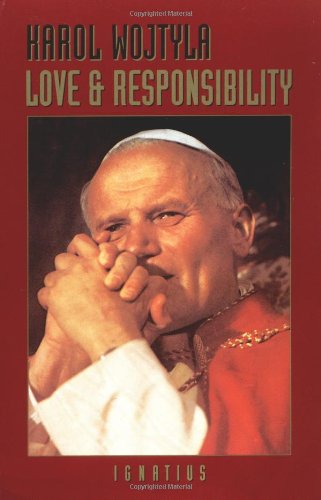
These books reflect our culture and the distorted sense of love. Young people naturally think that love is all about wanting to be with the person, the pleasure you take, how the other makes you feel. Of course, love has those components but real love is an act of will, doing what is best for the other. It's a boy protecting a girl, a girl trusting a boy, and both exercising self-control. For young people reading this: the best way to measure love is given by Saint John Paul II in his book, Love and Responsibility: The greater the feeling of responsibility for the person the more true love there is. I highly recommend this book.
Saturday, May 17, 2014
The Life and Death of Rosco
We bid goodbye to Rosco ... he was the bad one, the naughty one, the rascal.
After he bullied and bit his brother Robo, we separated the two. Rosco joined another family with lots of kids and did great. Alas, their new cat was stalking him and so they gave him back to us. Since dwarf hamsters only live a couple of years we didn't want to give him to anybody else.
Two weeks ago we noticed he had a swollen leg. We took him in to see the vet, and there's not much they could do but give him some antibiotics to reduce the swelling. They suspected his leg somehow got caught in something, but he clearly extricated himself, but developed an infection. He started to recover, running quite nicely with his injured leg tucked next to his body ... but a couple of days ago he became lethargic. I couldn't figure out what had changed. But on Thu morning, as he dragged himself to get a drink of water and eat some nuts and seeds, I saw a giant tumor on his belly. Poor guy. This had to be a fast-growing tumor because it wasn't there two weeks ago. However, Rosco isn't tame so I couldn't examine him without getting bitten. I am so glad I took him in to die before he started to suffer. Right up until the end, he was busy in his box nibbling on a carrot, shelling a sunflower seed and shredding paper. After he was given a lethal injection, he died peacefully in Dagny's hands. Her first pet to die. Oh how we cried.
That ugly tumor weighed 5 grams. Rosco was only 25 grams. FYI 30 g = 1 ounce.
Cancer is ugly.
I suspect this isn't the last we've seen of it. All our pets are getting old. But what joy they've brought us. Even Rosco, the rascal.
Moral of the story, if you are naughty, you will be sent away. Ummm ... are you reading this, kids?
What's good for a hamster is good for a human. Nah. To have compassion means to "suffer with" not "put them out of their misery." Remember that humans are capable of redemptive suffering.
It was only after Rosco died that we could pet his ultra-soft fur and translucent ears. His front paws are a marvel. How they held a seed or a slice of carrot so that he could nibble. I imagine he's up in heaven, perfect in his beauty, perhaps acquainting himself with my first cat. And yes, you do know that all dogs and cats go to heaven as do all rocks and ribbons, right?

After he bullied and bit his brother Robo, we separated the two. Rosco joined another family with lots of kids and did great. Alas, their new cat was stalking him and so they gave him back to us. Since dwarf hamsters only live a couple of years we didn't want to give him to anybody else.
Two weeks ago we noticed he had a swollen leg. We took him in to see the vet, and there's not much they could do but give him some antibiotics to reduce the swelling. They suspected his leg somehow got caught in something, but he clearly extricated himself, but developed an infection. He started to recover, running quite nicely with his injured leg tucked next to his body ... but a couple of days ago he became lethargic. I couldn't figure out what had changed. But on Thu morning, as he dragged himself to get a drink of water and eat some nuts and seeds, I saw a giant tumor on his belly. Poor guy. This had to be a fast-growing tumor because it wasn't there two weeks ago. However, Rosco isn't tame so I couldn't examine him without getting bitten. I am so glad I took him in to die before he started to suffer. Right up until the end, he was busy in his box nibbling on a carrot, shelling a sunflower seed and shredding paper. After he was given a lethal injection, he died peacefully in Dagny's hands. Her first pet to die. Oh how we cried.
That ugly tumor weighed 5 grams. Rosco was only 25 grams. FYI 30 g = 1 ounce.
Cancer is ugly.
I suspect this isn't the last we've seen of it. All our pets are getting old. But what joy they've brought us. Even Rosco, the rascal.
Moral of the story, if you are naughty, you will be sent away. Ummm ... are you reading this, kids?
What's good for a hamster is good for a human. Nah. To have compassion means to "suffer with" not "put them out of their misery." Remember that humans are capable of redemptive suffering.
It was only after Rosco died that we could pet his ultra-soft fur and translucent ears. His front paws are a marvel. How they held a seed or a slice of carrot so that he could nibble. I imagine he's up in heaven, perfect in his beauty, perhaps acquainting himself with my first cat. And yes, you do know that all dogs and cats go to heaven as do all rocks and ribbons, right?
Wednesday, May 14, 2014
The Gut-Punching Things Teenagers Say
My husband and I are forever indebted to our two children for leading us to God. I look at them in wonder and amazement. It's hard to believe how quickly they are growing up ... and contrary to popular notions, teenagers are incredible!
We were celebrating my daughter's 13th birthday and as we usually do, we thanked her for having a birthday so that we can splurge on eating out, and she thanked me for having her. It was almost a punch in the gut. It was a given ...
Abortion was never an option, but I wonder about their missing siblings. Given my natural cycle and fertility, without contraception, I can imagine having at least half a dozen kids. The thought frightened me at the time. I felt overwhelmed. But now we miss them, the love and life, the chaos and graces they would've brought into our family. I wonder whether my children miss them. I think deep down they must, especially my daughter, who has always wanted more little ones. And if we look beyond our own family, a contraceptive culture means we have a couple of generations of children who are missing not just their siblings, but their friends, and future spouses. It is incredibly sad.
So imagine my horror when I learned that a woman, Emily Letts, posted a video of herself having an abortion. This is terrible on so many levels. First of all, when does filming murder become art? I can only hope she is acting. However, her dead eyes reveal the truth. Watch the video without the sound. Elizabeth Scalia does a brilliant analysis. This is a woman in grief, her body mourning her dead child, even if she refuses to see it herself, even if the abortion industry will use it to lure mothers to kill their babies. Second, what kind of people are we to award her a prize for it? Why do we call this evil a good thing? Emily calls herself "a lucky girl." She thinks the abortion was "cool." Third, she is in awe ... of making a baby, of having life ... but if she truly understands this, how could she kill her baby?
Her poor, poor baby.
Emily said she is not ready to be a mother. But she already is. Now she's the mother of a dead baby.
Can any good come out of this? God only knows. Pray for all mothers to listen to their consciences, to return to God. Our heavenly Father always gazes upon us. We only need to repent our sinful ways, amend our lives, come running to Him, and He will take us up into His arms. He renews us.
Parce Domine!
Sunday, May 11, 2014
Happy Mother's Day!
My sister sent me this beautiful old photo of my mother with my two brothers. Arun is a year old and Mohan, just 10 days old, as my mother writes. Seeing her handwriting after so many years brings tears to my eyes. My sister and I have not yet been born, but I love that from all eternity we've already been conceived in the mind of God. My mother is so young, so vulnerable, so beautiful. And she remained so until her death. I alternately ask her to pray for us, and offer prayers for her. And I look forward to the day when we can be together again in the company of all the other saints.
Mohan shared a beautiful memory with me: When you came home, it was and still is the most wonderful event that I remember. I remember examining your little fingers and toes. And yes, you really did wink. I begged Ai to let me hold you. She did and I was just amazed. From that day on, I wanted a baby girl of my very own - the wish has been granted. I have experienced a kind of joy twice: when you were an infant, I would stare at your face and hope that you would open your eyes. You smiled and I would fancy that you recognised me and I still believe it! Even now, when I come home I love to watch Anju's face just as she is waking up. It reminds me a lot about you.
To all mothers, I wish you a beautiful and blessed Mother's Day, today and every day. May God grant you all the necessary graces. May you be cloaked in all the virtues of the Blessed Mother. I am so thankful Jesus gave us His holy Mother at the foot of the Cross.
Tuesday, May 6, 2014
On Love
Nature bids us love God!
Thou shalt love the Lord thy God with thy whole heart, and with thy whole soul, and with thy whole mind. ~ Matt. 22:37
St. Alphonsus says, "Love of God is a divinely infused virtue which leads us to love the Lord our God as the sovereign good, and purely for His own sake."
The good saint challenges us and then gives practical ways to advance in God's love:
First, an ardent desire for perfect love.
Second, renounce all love that doesn't refer to God.
Third, deny oneself by gladly embracing what is opposed to self-love, and refusing oneself what self-love demands.
Fourth, frequent meditation on the sufferings of Jesus Christ, so that our hearts may be inflamed with love for our suffering Savior and to learn from Him what He desires us to do.
Fifth, prayer. "Jesus, give me Thy holy love." The Lord is generous is the bestowal of His gifts; but He is especially bountiful in giving His love to those who seek it.
The good saint challenges us and then gives practical ways to advance in God's love:
First, an ardent desire for perfect love.
Second, renounce all love that doesn't refer to God.
Third, deny oneself by gladly embracing what is opposed to self-love, and refusing oneself what self-love demands.
Fourth, frequent meditation on the sufferings of Jesus Christ, so that our hearts may be inflamed with love for our suffering Savior and to learn from Him what He desires us to do.
Fifth, prayer. "Jesus, give me Thy holy love." The Lord is generous is the bestowal of His gifts; but He is especially bountiful in giving His love to those who seek it.
Oh, to love Him perfectly, for nothing, no reason. It is everything. I am sorely lacking. The love I experience is bounded by my human nature. I love Him because He made me, because He is all good, because I want to be with Him, because He has blessed me abundantly. Would I love Him the same if my life were filled with strife? I think not. Remember, I lost my faith over the problem of suffering. That's because even though my heart is moved when I think of Him as a Babe at Christmas, I failed to understand the depths of His love for me when He endured His cruel crucifixion. And therein is the mystery of love. He lays down His life for me, for you, for the whole world.
I was struck when Sister Jane Dominic spoke about woman's greatest desire: to be loved for who she is. Yes! Not for what I can do or give, but to be loved for who I am. And then she posed the question of man's greatest desire. I didn't know what it was. I looked to Michael and wondered if he'd whisper it to me. But there was pin drop silence. We waited to hear what Sister had to say. She said, man's greatest desire is to lay down his life for those he loves.
And everything clicked. Man, made in the image of God. Who lays down His life for us.
And so love of God is tied intimately to love of neighbor. St. Alphonsus says, "Why must we love our neighbor? Because he is loved by God." He goes on to remind us that brotherly love induces us to practice mutual forbearance.
And so what is love? St. Paul defines it for us in his letter to the Corinthians: Love is patient; love is kind; love is not envious or boastful or arrogant or rude. It does not insist on its own way; it is not irritable or resentful; it does not rejoice in wrongdoing, but rejoices in the truth. It bears all things, believes all things, hopes all things, endures all things. Love never ends.
It's a tall order. And the hardest to exercise with the people I know and say I love. St. Alphonsus gives some acts to practice in loving our neighbor:
Strive in the first place to reject every rash judgment, every distrust, and unfounded suspicion of your neighbor.
For charity in speech, avoid calumny and slander.
Give alms to the poor and needy.
Above all, extend charity towards your enemies. It is heavenly revenge!
Strive in the first place to reject every rash judgment, every distrust, and unfounded suspicion of your neighbor.
For charity in speech, avoid calumny and slander.
Give alms to the poor and needy.
Above all, extend charity towards your enemies. It is heavenly revenge!
This is my commandment, that you love one another as I have loved you. ~ John 15:12
My love is so limited and often, distorted. But my good friend Fulton Sheen (soon to be a saint, who is embracing Saint John Paul II) comes to the rescue. In one retreat he explains the conversation between Jesus and Peter after the resurrection. Jesus asks Peter, "Do you love me?" And thrice Peter declares his love. However, Peter uses the word "philia" (brotherly love) instead of "agape" (self sacrificial Godly love) that Jesus uses. But the third time, Jesus comes down to the human level of Peter and uses the word philia. Oh, how our Lord understands and knows our limitations, yet He trusts Peter to "feed My sheep." He is the Good Shepherd.
I wanted to speak of love in stories but this post is too long already. So I will close in His love.
My love is so limited and often, distorted. But my good friend Fulton Sheen (soon to be a saint, who is embracing Saint John Paul II) comes to the rescue. In one retreat he explains the conversation between Jesus and Peter after the resurrection. Jesus asks Peter, "Do you love me?" And thrice Peter declares his love. However, Peter uses the word "philia" (brotherly love) instead of "agape" (self sacrificial Godly love) that Jesus uses. But the third time, Jesus comes down to the human level of Peter and uses the word philia. Oh, how our Lord understands and knows our limitations, yet He trusts Peter to "feed My sheep." He is the Good Shepherd.I wanted to speak of love in stories but this post is too long already. So I will close in His love.
Subscribe to:
Posts (Atom)