Thursday, February 11, 2016

My Name is Mahtob

I only vaguely remembered the escape of mother and daughter from Iran, so when I saw My Nameis Mahtob I was compelled to read it. This is the daughter’s story, based on her memories. Mahtob states expressly that even when she had the chance to read her mother’s book, Not Without My Daughter, she didn’t. She’d lived it and she wanted to move forward. She was nearly six years old when she, along with her American mother and Iranian father, went to Tehran for what was supposed to be a two-week vacation. Betty (mom) wasn’t happy about this because at the time Iran was at war with Iraq and Americans were hated. However, her husband swore upon the Koran that they’ll be back in two weeks. He lied.

Mahtob remembers everything clearly. How her father changed from a loving husband and father to one who was abusive, hitting and threatening them. She was terrified not only by her father but the school teachers and soldiers and bombings. She recounts the 18 months they were in Iran, the local school where she was made to say things like “Death to America” and the soldiers with their guns. They waited patiently for the opportunity to plan an escape. As time wore on, her father became more lax and allowed his wife to do the shopping, a time-consuming chore with much standing and waiting in lines to get the most basic necessities. But this allowed Betty to ask for help from some shopkeepers, and praise God that they didn’t turn her in.
The day of the escape is so vivid in Mahtob’s memory. They got a tiny window of opportunity and under the pretext of buying flowers, they left with only the items Betty threw in her bag. Betty tells Mahtob it is her choice, that if they leave to go to America, they might never see Daddy again. Mahtob considers this and asks for her bunny, her closest companion. Betty is matter-of-fact and lets Mahtob know what the options are: go back to get the bunny and stay here or leave the bunny and go to America. “What do you want to do?
The choice was mine and mine alone.
And she wanted to go home to America.
The escape over the snowy Zagros mountains into Turkey is presented as snapshots of memory.
A busy square – or perhaps a circle – in Tabriz. Traffic everywhere, absolute chaos. Mom and I sit in the backseat.
Mom and I are alone in a ramshackle stable, sitting on the dirt floor.
Darkness.
Riding gingerly along the narrow, icy edge of the mountain, I don’t know if it’s the same night or the same horse or if I’m riding with the same stranger. What I do know is that Mom and I are separated, and I don’t like it.
The first quarter of the book is fascinating and fast-paced because of all that Mahtob remembers living in Iran. But life in the United States isn’t peachy. They live under a constant threat of being found and kidnapped. Even so, Betty writes her memoir as a way to support herself and also gain public protection. She also helps others in similar situations. Mahtob is enrolled in a Lutheran private school and you can see how much the love of Jesus was a balm to this poor, suffering soul. Sometimes I wish she had it before they left Iran, but I am grateful she was consoled by Jesus in due time. It is great testament to Betty’s love that Mahtob is as forgiving as she is. It is Betty who gets Mahtob to embrace her Persian half and remember the good times they had together with Daddy before he turned into a radical Muslim. Mahtob is careful to say that she doesn’t think all Muslims or Iranians are wicked just because her father was the way he was.
The pace slows down as Mahtob recounts growing up in America, the many times they have to move because they are afraid they’ve been found out, of never feeling safe. She feels guilty for putting her friends and extended family in danger. She is trailed by a student for a documentary that her father makes. And if this isn’t difficult enough, she is diagnosed in her early teens with lupus, an auto-immune disease. Mature for her age, she takes responsibility for learning all about managing her disease.  
Her experiences lead Mahtob to study psychology in college. She wants to understand why some people crack and why some are resilient. One of the exercises in her studies is especially therapeutic: counting happy moments, one by one. This was a turning point for her. Mahtob was able to notice the little things that made her happy and it became a habit. She was grateful not just for the big things, like being free, but for the little things as well, like rolling a pomegranate, drinking Turkish coffee, watching children play. This reminds me so very much of Ann Voskamp's One Thousand Gifts.
Towards the end of the book, the narrative is more random. Mahtob shares a variety of thoughts and letters, including a couple from her father, and ends up diagnosing him as having narcissistic personality disorder. She writes, “It doesn’t excuse him. It doesn’t justify him. It doesn’t in any way make what he did okay, but it does help me make sense of it.” Further, she writes, “These letters in so many ways validate my decision to exclude my father from my life… I didn’t need to talk to my dad to make peace with his place in my life. I did that years earlier, and I laboriously repeated the process each time he resurfaced. This was no exception.
I really enjoyed this memoir of two very brave and courageous women. My hope is that Mahtob will have a peaceful life after all she has endured, that no one will try to take up her father's cause (he's deceased) and exact revenge for not being the Muslim daughter he so wanted. 
Thanks to BookLook for providing a review copy. I am posting this on Amazon as well. 

Wednesday, February 3, 2016

Reading

I am doing so much better this month, but there are gifts to count even while one is incapacitated.
1. soft pillows
2. purry cat
3. good books
and much, much more ...

One Thousand Gifts: a Dare to Live Fully Right Where You Are by Ann Voskamp: Her name is so familiar, I must have read some reflections of hers in other books, so when I chanced upon this in the thrift-store I had to pick it up. I challenge you to do as she did -- name a thousand gifts -- one thousand blessings, ways you realize you're the beloved of God. I guarantee you, even in your hardest moments, you'll be able to thank and bless the Lord.

What I loved about this book is how poetically Ann writes about the ordinary things -- laundry, cooking, playing with children. She's a pig-farmer's wife, raising their six children. I'll share this with Dagny when she's a bit older. Ever since we saw that episode on Little House where Nelly runs off to marry a pig farmer, we've joked about her marrying one as well (for all the bacon). I'm afraid that the modern woman is often left feeling "is this all there is" because she's not been trained to embrace her vocation -- marriage and motherhood. And without that, the daily work of feeding and caring for children and home become a chore, instead of a calling from God to bring souls to Christ. Gifts. Offerings.

"Eucharisteo -- thanksgiving -- always precedes the miracle."


Dancing on the Head of a Pen: the Practice of a Writing Life by Robert Benson: I received this as a little freebie from Waterbrook Press and what a joy it was to spend some time with a person who is both deeply spiritual and loves writing. It's not a how-to book per se, but rather a why-to book. I'm at a creative low right now and it's helping me to examine why I write. This book reminded me very much of my dear friend Mel Boring, who taught at ICL and who used to encourage me much the same way before his death a few years ago.

But some advice is spot on: "O begin." Like Linda Sue Park, he writes 2 pages a day (600 words). Keep a journal. "A journal provides a place for him to learn to speak truth to himself about himself or discover his capacity for disingenuousness. A place to discover when he writes too fast of too glibly, too carefully or too safely. A place to discover his voice slowly over time so that when the real game is afoot, he can trust it."

Read good books; they are our best teachers. "A direct relationship exists between the caliber of the writing you read and the caliber of the writing you make."
 

Letters to a Young Poet by Rainer Maria Rilke: This book has popped onto my radar many times over the dozen years I've been writing so I finally felt compelled to get a copy. I'm not disappointed. The advice in the first letter itself is worth the price of the whole book. Ex.

"Go into yourself. Find out the reason that commands you to write; see whether it has spread its roots into the very depths of your heart; confess to yourself whether you would have to die if you were forbidden to write. This most of all: ask yourself in the most silent hour of the night: must I write? Dig into yourself for a deep answer. And if this answer rings out in assent, if you meet this solemn question with a strong, simple "I must" then build your life in accordance with this necessity ...."

"... Then take the destiny upon yourself, and bear it, its burden and its greatness, without ever asking what reward might come from the outside."

"...have patience with everything unresolved in your heart and to try to love the questions themselves as if they were locked rooms or books written in a very foreign language. Don't search for the answer, which could not be given to you now, because you would not be able to live them. And the point is, to live everything. Live the questions now. Perhaps gradually, without even noticing it, live your way into the answer."

Alas, reading this book also made me realize that I am in the category of Herr Kappus, whom the letters were written to. Has anyone heard of him? No, I didn't think so ...

Friday, January 29, 2016

Coping with Pain and Sorrow

I came across a wonderful article with some advice from the Angelic Doctor, St. Thomas Aquinas, on alleviating pain and sorrow.

1. Do something pleasurable
2. Shed tears; groan or speak your sorrow
3. Rely upon the compassion of friends
4. Contemplate Truth
5. Sleep and take baths

I am sleeping and resting a lot (well more like writhing in pain and finally falling asleep). My prayer is reduced to crying and taking the name of Jesus. I ask for mercy. I offer this up. I give thanks. But oh Lord, when will this end? 

It's hard to take pleasure right now, but writing affords me some, as well as the beautiful hymns and psalms that play in my head silently. I ask for your prayers to be strong and not give in to the pain. I already failed yesterday ... I have so much to learn about letting go of any and all expectations.

Looking at these pictures from the Christmas excursion in NC makes me happy.


Monday, January 25, 2016

My Mom's Feast Day

I do believe my mother is in heaven right now, interceding on our behalf and offering thanks and praise to God Almighty with all the saints and angels. It's hard to believe I am the same age as my mother when she died. Fifty-one feels too young. When I turned 41 I thought I would never want to die at 51 but what a difference faith makes. Death has lost its sting. When Michael and the kids were baptized, I gave them back to Jesus and their souls are indelibly marked as His possession. This Easter we will celebrate our 7th anniversary of being received into Holy Mother Church. God is so good to us even when we're not.

My mom did well. She instilled her strong faith in us and even though I strayed -- for 30 years -- I returned home stronger than ever. Nothing can separate me from the love of Christ, but my own free will. But I choose Jesus.
 
Pray for us, Ai, that we may fight the good fight and persevere to the end. And just in case you are still being purified, I pray for you too.
 
Note: Today is also the feast of the Conversion of St. Paul on the road to Damascus. It really brings to mind the mystical Body of Christ.

Sunday, January 24, 2016

Early Lenten Season

This picture is in my St. Andrew's Missal. Lent is early this year and we prepare three weeks prior, cutting the season of Epiphany short. Christmas is all put away in our household ... even the cards.

My current detox program fits this preparatory period perfectly. Before I have a second round of Botox injections, I am weaning off all the painkillers. This means no aspirin, Tylenol, Motrin, triptans, sleeping aids, coffee, tea or chocolate. You see, I live day to day and try never to take the same thing twice in a row, but I still take something most days because there is always some pain. Things have just gotten worse over the past 12 years. Although I tried detoxing several years ago, I failed miserably. I was in so much pain (we're talking a 9-10 on a scale of 1-10) that I ended up having to go to ER. My neurologist and I decided that the best we can do for me is to manage the pain. However, now that we have Botox to help us, we have a good chance of teaching the brain not to rely upon the painkillers. My new neurologist says it takes anywhere from 2-12 weeks to detox completely. It's HARD folks. This self-denial.

It's funny, I thought I would miss my tea the most -- I have a cup of minty black tea every morning and afternoon -- but a crunchy apple works just as well. What I miss most is not being able to even take an aspirin, the wonder drug. So, a great deal of mortification here, but I pray the fruits will be great.

Pray for me and I will pray for thee.

ETA: I don't mean to alarm anybody. It's perfectly fine to take painkillers on an occasional basis.

Friday, January 22, 2016

God Bless America?

At the Republican debate, what Mike Huckabee said really resonated. How can we say God bless America when the soil is saturated with the blood of a million babies each year? 

Parce Domine!

The good news is that abortion is on the decline in spite of the fact that we've had the most pro-abortion president ever.

I think the sanctity of life is one of the most important issues to address. All other rights stem from this fundamental right to life.
 
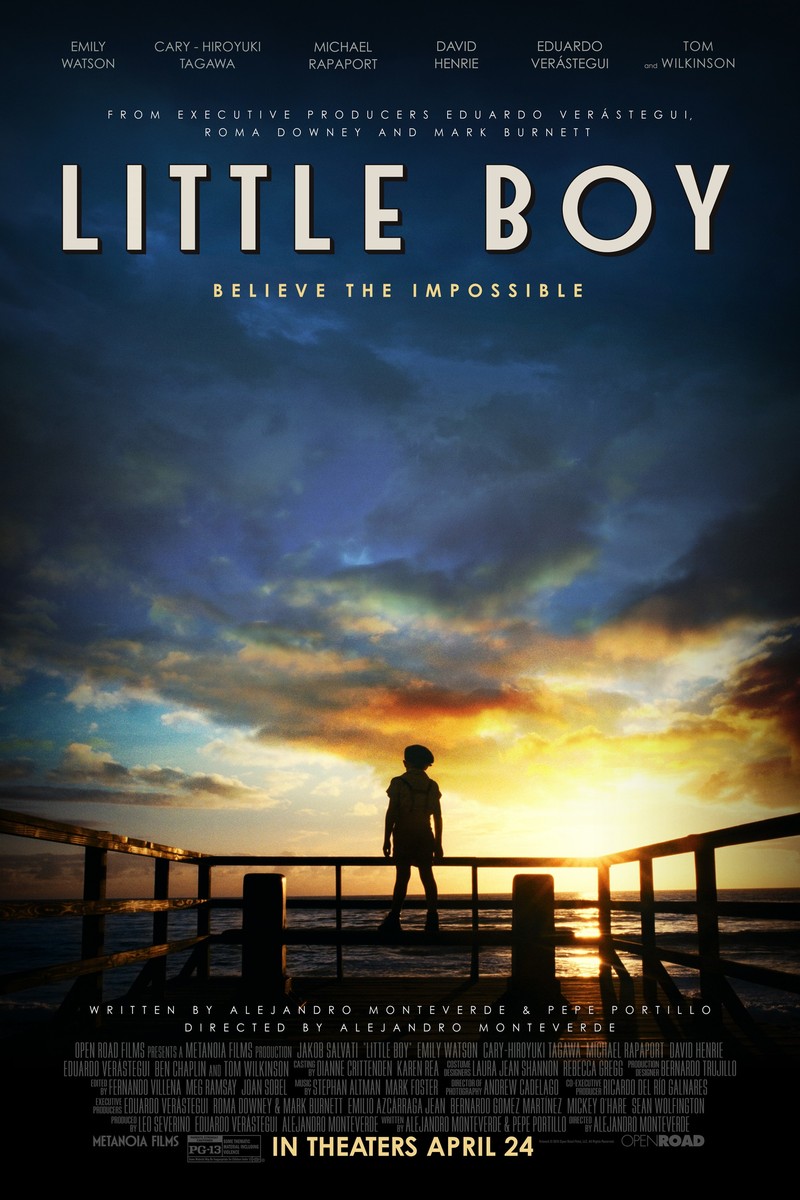
Recently we watched a lovely movie, Bella, that addresses why women have abortions and what we as a society must do to help. It's a great story with a beautiful cast of characters. A story to dissect and study. The same team made Little Boy, which I also enjoyed very much.  

Sunday, January 17, 2016

FREE Traditional Catholic Books

GOLDMINE! I came across this on Rorate Caeli. What a tremendous resource of free, traditional Catholic books, both in English and Spanish. Although I have a preference for printed books, having an e-reader has made it easier to read some amazing Catholic books without breaking our budget.

I hope you will find many titles of interest.


http://www.traditionalcatholic.co/free-catholicbooks/

http://www.traditionalcatholic.co/free-catholic-books-ii/

I love the sidebar with all the blogger's favorite saints. Fancy, they are some of my friends too!!!

Right now I'm reading Story of a Soul by the Little Flower on my kindle and I could just weep from joy, how tenderly she writes about her family, her joys and sufferings, and her love for Jesus. Pray for us, St. Therese!

Thursday, January 14, 2016

The Choice of the Family

We celebrated the Feast of the Holy Family last Sunday, so it’s a pleasure for me to share some thoughts about The Choice of the Family: A Call to Wholeness, Abundant Life, and Enduring Happiness by Bishop Jean Laffitte.

In a series of interviews conducted by Pierre and Véronique Sanchez, Bishop Laffitte explains how the family is the bedrock of society. This is the vocation most of us will have, so it’s important to do it faithfully.

For people familiar with St. John Paul II’s work, this will not be new. However, it always helps if the same ideas are reiterated in different ways. JPII’s book on Love and Responsibility is heavy reading. This book is far more digestible given the Q&A format, though at times, the questions felt too convoluted or leading. But most of the time one has the sense of sitting comfortably with the Bishop, possibly having some tea and biscuits, as he delves into the intricacies of family life. I especially liked that the interviewers spent some time on Bishop Laffitte’s background. He’s the youngest of a dozen children, raised in a faithful Catholic home. The example of his own family is lovely, with a father who leads the family and a mother who nurtures the gifts of her children. He drifted away for a while after Vatican II but adopted the faith he had received and answered the call to the priesthood eventually. He was among the “first generation” formed by the JPII Institute and now serves as the Secretary of the Pontifical Council for the Family.

The rest of the book is devoted to marriage, family life and the raising of children. As parents, we bear the responsibility towards our children to transmit the faith and it’s very clear that we cannot give what we do not have. So it’s essential for parents to practice the faith. He stressed the importance of marriage preparation. Most people forget that it begins in childhood (this is called remote preparation). You pray for your future spouse, you practice chastity so that you can make a total gift of yourself to the one with whom you will become one flesh. He advises against co-habitation because it is a lie to live like husband and wife when you have not made that commitment. He notes that it is much more difficult and damaging for the woman than it is for the man in a situation like this. The other effect of premarital sex is that the couple contracepts, but if it fails, they end up killing the baby. In the case that the couple eventually marries, there’s a higher likelihood of divorce. This is because the couple does not understand that marriage is forever.

Bishop Laffitte then speaks of proximal preparation, what we formally think of as marriage preparation, where the priest counsels couples preparing for marriage, and teaches them the true meaning of marriage, not as a contract that can be broken when things begin to go downhill, but rather as a covenant the man and woman make with each other and with God! One cannot undo what God has joined. Unfortunately, many people marry thinking that they can divorce if things go badly. This mentality has to change and it begins in our homes and families.

Once the couple is married, they need to be open to new life. This is God’s plan for marriage – for a child to enter the world with a mother and a father who love each other for the rest of their lives. Even Jesus came down to earth as an Infant in a family. That Mary and Joseph were chaste spouses was because they had given themselves totally to God and in His service.

He discussed at length how the contraceptive culture is damaging families. Increasingly more importance is placed on material wealth than the blessings that children bring to our lives. Instead of trusting in a providential God, we take matters into our own hands and sever the power He has given us in being co-creators with Him. Not every intimate act results in a child. God is the author of all life and He decides when the time is right for a child. And He will give all the necessary graces to raise that child!

The flip side of this is thinking that God owes us a child and then engaging in reproductive technologies that create a baby in a test tube. That is also sinful. A couple should never separate the unitive and procreative aspects of sex. A result of the entitlement attitude is that couple ends up treating the child as a commodity. It is big business that is bad for families. It has opened doors for people to make babies for themselves, babies they couldn't possibly have naturally.

He discusses pastoral care for the divorced and remarried, and for those who suffer from homosexual attraction. The bottom line is that we are all called to chastity. And we cannot present ourselves to receive the Holy Eucharist if we are not in a state of grace. So, it is still important to hear Holy Mass, but a couple that is not in a valid marriage must abstain from Holy Communion.

In today’s world, where people are confused about what marriage is, and how it should be lived, this book has many of the answers. You can tell that Bishop Laffitte is very much a shepherd and takes his vocation seriously in keeping the sheep on the right path. I highly recommend it.

Disclaimer: I am thankful to have received this book from Blogging for Books for an honest review. I have posted it on Amazon as well.

Saturday, January 9, 2016

Calendars, Christmas, and Contemplating the Cosmos with the Help of Hexaflexagons

We reluctantly put away Christmas, but our tree was getting too dried. So we've been tidying up as well and I tore out my favorite art from my 2015 calendar (Mary and the Saints) and put it below my bulletin board. My gaze wanders there often as I sit in my chair to write and it makes me happy. I love Catholic art and this is my favorite calendar because it has both the traditional and new feast days. 

File:Observable universe logarithmic illustration.png
Artist's logarithmic scale conception of the observable universe with the Solar System at the center, inner and outer planets, Kuiper belt, Oort cloud, Alpha Centauri, Perseus Arm, Milky Way galaxy, Andromeda galaxy, nearby galaxies, Cosmic Web, Cosmic microwave radiation and Big Bang's invisible plasma on the edge.

Christmas makes me think about creation and I saw this amazing picture by Pablo Carlos Budassi. So beautiful! The article has links explaining the logarithmic scale and how Budassi came up with the idea ... all with a simple paper toy called a hexaflexagon. As you can imagine, this immediately piqued my interest and I was sucked down that rabbit hole. I spent most of yesterday constructing and deconstructing my own hexaflexagons.

My kids were embarrassed that I tore strips of the paper placemat at the Indian restaurant ... but it has just the right texture and was long enough to make a hexa-hexaflexagon. All this brought back wonderful memories of my childhood making paper toys like these with secret folds and hidden messages.

Note for math lovers and teachers: Vi Hart has a series of videos about math concepts. Great fun. Check them out.

Wednesday, January 6, 2016

Cologne Cathedral and Epiphany


I had no belief in God when I was a post-doctoral fellow at the Max Planck Institute in Cologne, Germany. But I was very much attracted to the Koelner Dom -- this grand Gothic Cathedral -- and made several visits. Friends gave us private tours and if they mentioned the Three Wise Men, I don't remember paying attention or taking many pictures. These scant few are all I have. I was awestruck, marveling at the structure and the beauty within.

Shrine of the Three Kings in Cologne Cathedral -- photo taken from Wikipedia
Do these really house the bones of the three wise men? Who knows? Fr. Dwight Longenecker writes about it in some depth here. It's believed that St. Helena, the mother of Constantine, who discovered the true Cross, also discovered the remains of the three wise men in the East (probably in India) and brought them back to Constantinople. Yes, legend has it that one of the Wise Men came from India :) Of course, if there's any mention of the East, Indians will claim some part of it. LOL. My mother also told me Elvis Presley was from India.

Our priest gave a wonderful homily for Epiphany. We all know the Gospel story (Matt 2:1-12). The wise men from the East have been following the star that prophesizes the birth of a King. They naturally go to see Herod, who was ruling at the time. He consults with the scribes and priests and indeed, there is a prophecy. Herod is afraid of losing power so tells the Magi to tell him where the Babe is so that he too can give Him homage. Of course, he has no such intention. When the Magi return home another way (warned by an angel) Herod murders all the male children under the age of two. The first martyrs.

Consider the reaction of the three types of people. Herod, afraid of the newborn King, of losing his power. His response is murder (he was such an evil man that he murdered several family members and when he knew he was going to die, he had people killed so that there'd be mourning). Then we have the scribes and the priests, who were indifferent. They check out the Scriptures but aren't moved to do anything. Nowhere do we hear that they are curious or want to see for themselves this amazing event, the coming of the Messiah. Then there are the three wise men, who seek Truth, and will undertake an enormous journey because it is their treasure. They find Truth. And with it, also Beauty and Goodness. They humble themselves and offer what they have and leave completely changed. Once you encounter Christ, you cannot be the same. You will either hate Him, be indifferent, or fall on your knees to worship Him. This is the truth. I am a witness to it.

G. K. Chesterton wrote The World's Desire. I imagine this is what the three Wise Men saw and felt deep in their hearts. Yesterday, Faith posted a poem -- Here is a Little Door -- by his wife, Frances! I like these little coincidences, being on the same wavelength.

May we all receive the gifts of the magi: eyes to seek Him, feet to follow Him, and hearts to worship Him. Wishing you a blessed and happy Epiphany!

Write this upon your doorpost: 20 + C + M + B + 16
The CMB stand for Caspar, Melchior, Balthazar and also Christus mansionem benedicat.